Big Bopper
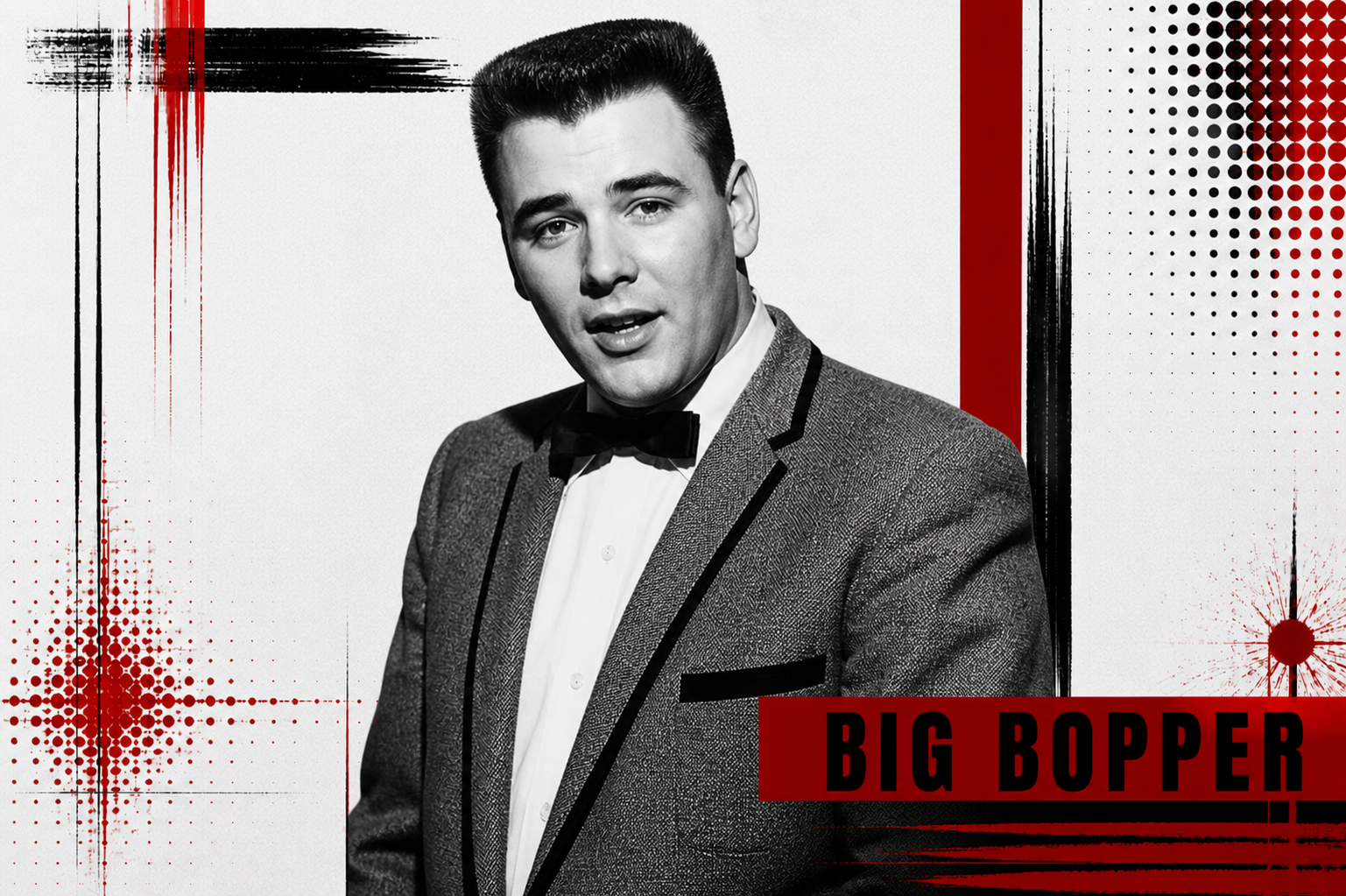
The Big Bopper, born Jiles Perry Richardson Jr., was an American musician, songwriter, and radio personality who played a notable role in the early days of rock and roll. Known for his energetic personality and deep voice, he became a distinctive figure in late 1950s popular music. His style blended rock and roll with novelty and spoken-word elements, helping him stand out during a formative period in the genre’s development.
He gained widespread recognition with his hit song “Chantilly Lace” (1958), a playful and charismatic track built around a telephone conversation format. The song showcased his larger-than-life persona and became a defining hit of the era. In addition to performing, Richardson was also a prolific songwriter, contributing to other artists’ success with compositions such as “White Lightning,” which was recorded by George Jones.
Before his recording career took off, the Big Bopper worked as a radio DJ, where he developed his engaging on-air presence and nickname. His experience in broadcasting influenced his musical style, which often incorporated humor, storytelling, and a conversational tone. This background helped him connect with audiences in a unique and memorable way.
His promising career was tragically cut short in 1959 when he died in a plane crash alongside Buddy Holly and Ritchie Valens—an event often referred to as “The Day the Music Died.” Despite his brief time in the spotlight, his impact on early rock and roll and popular music culture remains significant.
Today, the Big Bopper is remembered as a colorful and influential figure in rock and roll history. His contributions as both a performer and songwriter helped shape the sound and personality of the genre’s early years, and his legacy endures through his recordings and the lasting cultural memory of his work.