Green Day
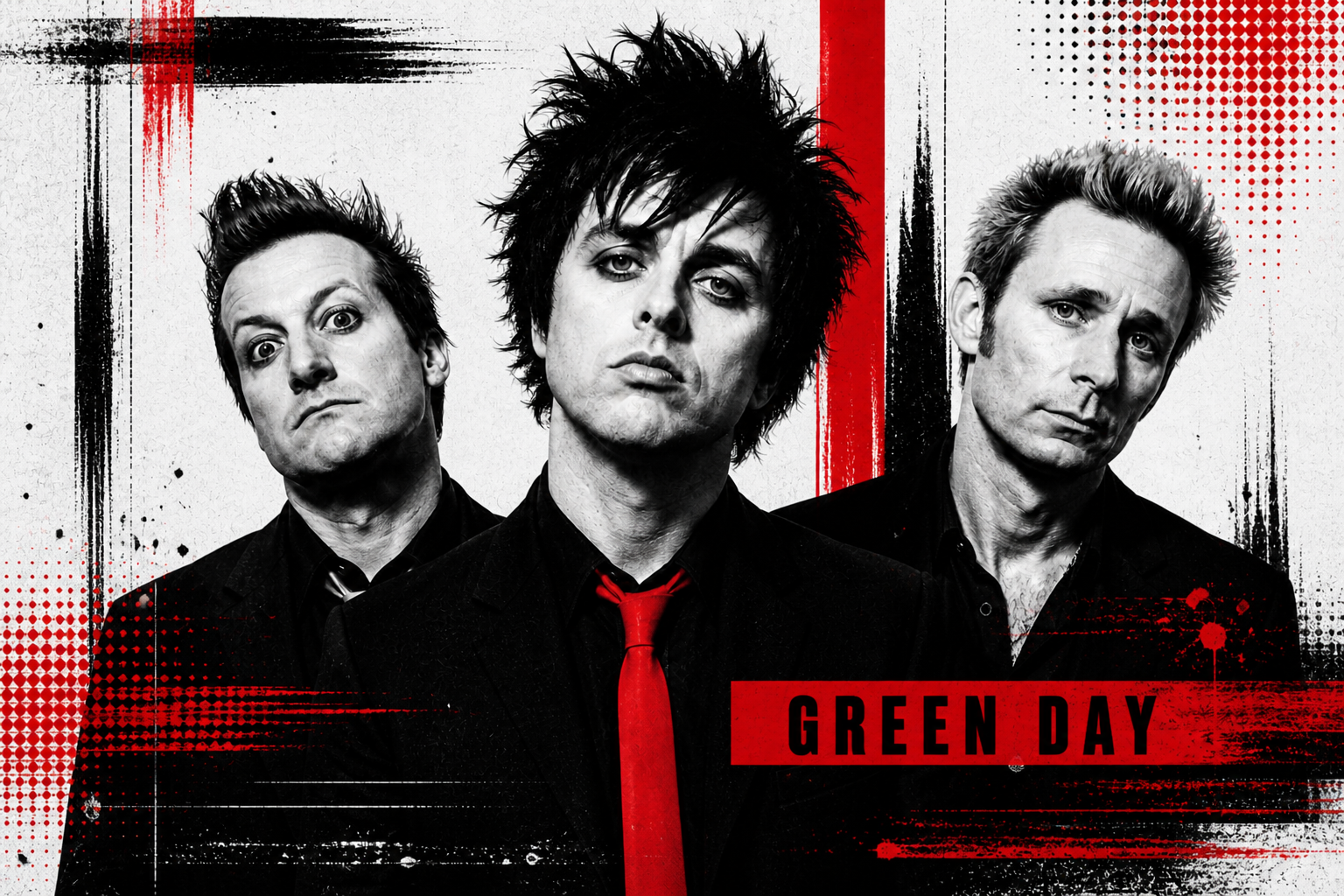
Few bands have defined the sound and spirit of modern punk rock quite like Green Day. Formed in the late 1980s in the East Bay of California, the trio—fronted by Billie Joe Armstrong alongside bassist Mike Dirnt and drummer Tré Cool—emerged from the underground punk scene with a raw, fast, and rebellious energy. What set Green Day apart early on was their ability to pair that grit with sharp songwriting instincts, crafting songs that were both immediate and deeply memorable.
Their breakthrough came with Dookie in 1994, a record that didn’t just succeed—it exploded. Packed with tracks like “Basket Case” and “When I Come Around,” the album brought punk rock back into mainstream consciousness at a time when alternative music was already reshaping the industry. Yet Green Day’s version of punk was more than attitude; it was melodic, self-aware, and often laced with humor and anxiety, capturing the restless mindset of a generation navigating boredom, identity, and disillusionment.
As the band moved forward, they refused to remain locked in their early sound. Albums like Nimrod and Warning showcased a willingness to experiment, incorporating acoustic textures and broader songwriting approaches. This evolution reached a defining moment with American Idiot, a rock opera that elevated Green Day into a new artistic space. With its politically charged themes and narrative structure, the album demonstrated that the band could channel their punk roots into something larger—both musically and culturally—resonating with audiences during a time of global tension and change.
Throughout their career, Green Day has balanced accessibility with edge, maintaining their identity while expanding their reach. Their live performances, known for their intensity and crowd interaction, have played a crucial role in sustaining their connection with fans across decades. Even as musical trends shifted, the band continued to release new material and tour extensively, proving their staying power in an industry that often moves quickly past its earlier icons.
Green Day’s legacy lies in their ability to bridge worlds—underground punk credibility and mainstream success, youthful rebellion and mature reflection. They remain one of the few bands capable of evolving without losing the core energy that first defined them. As they continue forward, their influence persists not only in the music they create, but in the countless artists who have drawn inspiration from their blend of urgency, melody, and fearless reinvention.