Del the Funky Homosapien
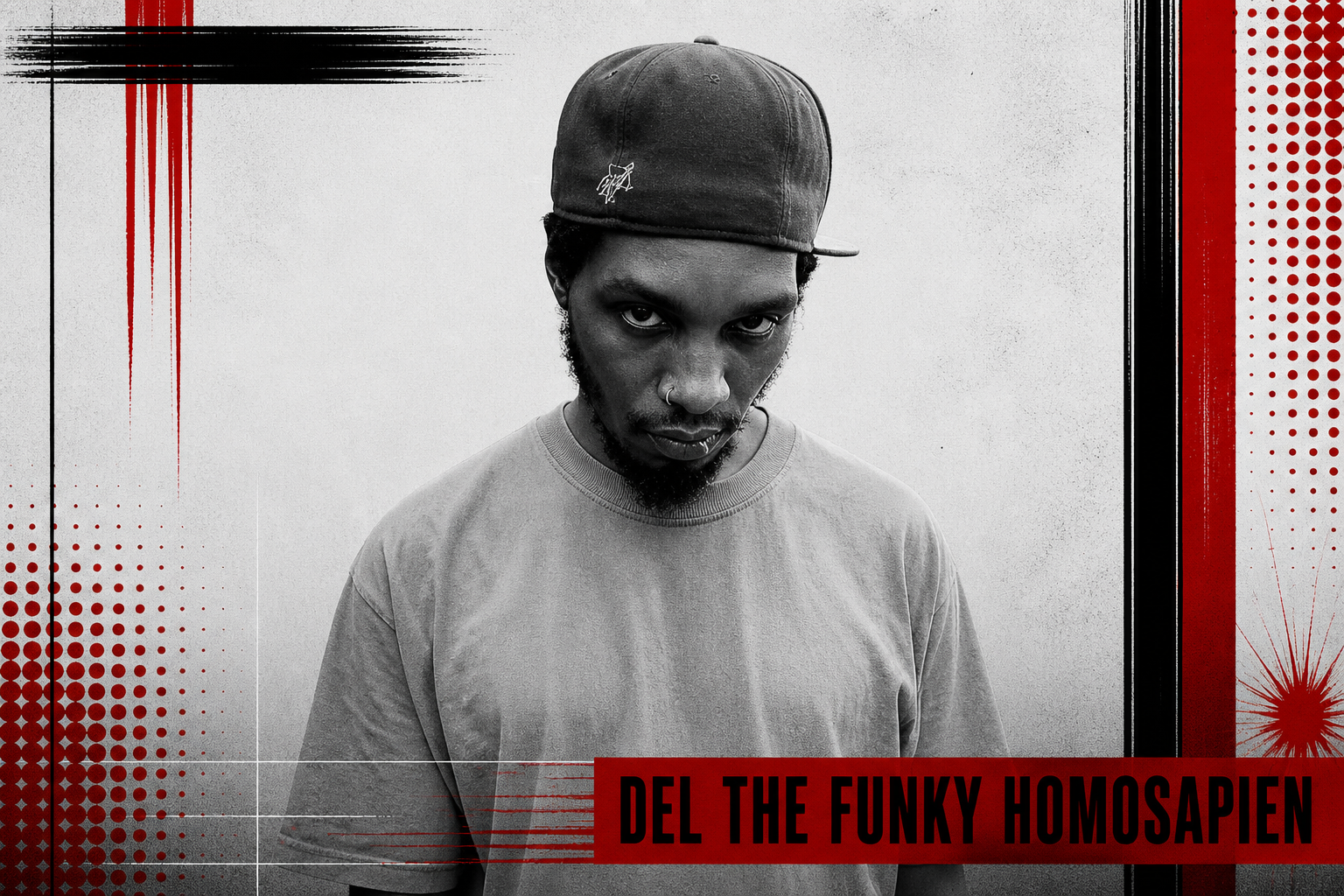
Known for his imaginative lyricism, eccentric humor, and fiercely independent artistic identity, Del the Funky Homosapien carved out a unique place in hip-hop by rejecting convention and embracing creativity without limits. Emerging from Oakland during the early 1990s, Del became one of the defining voices of alternative hip-hop, blending sharp social commentary, surreal storytelling, funk-inspired production, and futuristic themes into a style that felt entirely his own.
Born Teren Delvon Jones, Del grew up surrounded by music and culture in the Bay Area, a region already known for innovation and individuality within hip-hop. He is also the cousin of Ice Cube, a connection that helped introduce him to the industry early in his career. However, while Cube became known for politically charged gangsta rap and aggressive realism, Del quickly distinguished himself through a more playful, abstract, and unconventional creative approach.
Del first gained major attention with his 1991 debut album, I Wish My Brother George Was Here. The project showcased a young artist with an unusual balance of humor, intelligence, and originality. Tracks combined offbeat storytelling with commentary about media, consumer culture, and everyday life, often delivered through animated flows and unconventional rhyme structures. While many rappers of the era focused heavily on toughness and street narratives, Del leaned into individuality and eccentricity, helping expand the possibilities of what hip-hop could sound like.
One of the album’s standout tracks, Mistadobalina, became a cult classic thanks to its infectious groove, sarcastic wit, and memorable hook. The song captured Del’s ability to combine humor with criticism, mocking fake personalities and superficial behavior while maintaining an effortlessly funky energy.
As the 1990s progressed, Del moved even further into experimental territory. His 1993 album No Need for Alarm is often regarded as one of the defining underground hip-hop records of its era. Rejecting mainstream trends entirely, the album focused on lyrical complexity, dense wordplay, and innovative flows. Del positioned himself as an artist more interested in skill, creativity, and authenticity than commercial formulas, earning deep respect within underground hip-hop circles.
Del’s influence expanded dramatically through his involvement with the legendary collective Hieroglyphics, a Bay Area crew celebrated for lyrical experimentation and independent entrepreneurship. Alongside artists like Souls of Mischief, Del helped create a movement that emphasized artistic freedom, technical ability, and community-driven success outside the traditional music industry system.
In addition to his solo work, Del became widely recognized for collaborating across genres and creative worlds. One of his most globally visible projects came through his work with Gorillaz on the massive hit Clint Eastwood. As the voice behind the track’s unforgettable rap verses, Del introduced his unique style to an international audience, helping turn the song into one of the defining alternative music hits of the early 2000s. His presence on the record demonstrated how naturally his unconventional approach could blend with experimental, genre-crossing music.
Throughout his career, Del consistently resisted trends and industry expectations. His music often explored science fiction, philosophy, technology, social criticism, and absurd humor, creating a catalog that felt intellectually adventurous without losing its sense of fun. Albums like Both Sides of the Brain and Eleventh Hour continued to showcase his evolution as an artist unafraid to experiment sonically or lyrically.
Del also became known for his commitment to independence long before independent artistry became commonplace in hip-hop. He embraced direct fan relationships, underground touring, and self-driven creative control years ahead of many artists who would later adopt similar approaches in the digital era.
What makes Del the Funky Homosapien especially significant is how fully he embraced originality. Rather than chasing mainstream validation, he built a career around curiosity, creativity, and authenticity. His work helped legitimize alternative hip-hop as a serious artistic movement and inspired generations of rappers who valued experimentation over conformity.
Today, Del remains widely respected as one of hip-hop’s true innovators — an artist whose music proved that rap could be weird, intelligent, funny, futuristic, deeply lyrical, and entirely uncompromising all at once. His legacy continues to resonate not only through his own catalog, but through the countless artists who followed his example and discovered that individuality itself could become a creative superpower.