Fuel
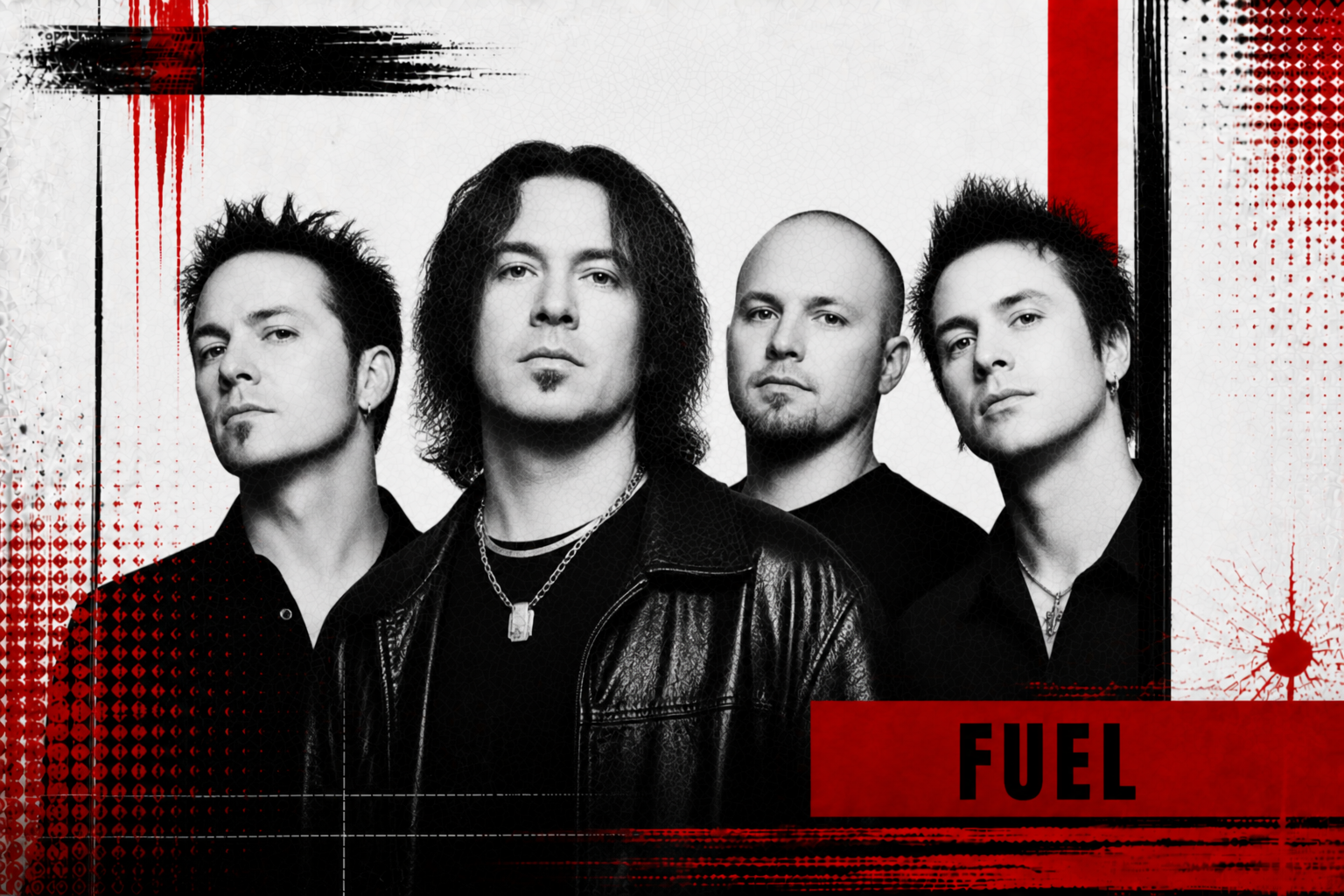
A steady pulse of distorted guitars and emotionally direct songwriting defines the identity of Fuel, a group that emerged during the late 1990s when alternative rock was transitioning into a more radio-driven era. Formed in Pennsylvania, the band positioned itself within the post-grunge movement but brought a sense of melodic discipline that helped separate it from many of its peers. Their sound wasn’t just about volume or aggression—it was about structure, pacing, and the ability to build a song that connected on both a sonic and emotional level.
In the early stages, Fuel developed its style through a combination of local performances and independent releases, gradually refining a sound that balanced heaviness with clarity. The band’s approach to songwriting emphasized strong hooks and accessible arrangements, allowing their music to resonate beyond niche audiences. This groundwork set the stage for their transition into the mainstream, where their material would reach a much wider listenership.
The release of Sunburn marked a significant turning point, introducing a broader audience to their blend of introspection and guitar-driven energy. Tracks from the album demonstrated a clear understanding of dynamics, often beginning with restrained passages before expanding into fuller, more powerful sections. This sense of progression became a hallmark of their style, creating a listening experience that felt deliberate and cohesive rather than fragmented.
Central to the band’s early success was the presence of Brett Scallions, whose vocal delivery added depth to the band’s material. His ability to move between softer, reflective tones and more forceful expressions allowed the songs to explore a wider emotional range. Rather than dominating the instrumentation, his voice often worked in tandem with it, reinforcing the overall mood and direction of each track.
With Something Like Human, Fuel expanded their reach even further, refining their sound into something more polished while maintaining the emotional core that defined their earlier work. The album’s production highlighted their strengths, bringing clarity to the instrumentation and emphasizing the melodic elements that made their songs memorable. This period represented the peak of their commercial visibility, with tracks gaining significant radio play and audience recognition.
“Hemorrhage (In My Hands)” stands as one of the most recognizable moments in their catalog, a track that captures the band’s ability to merge simplicity with emotional weight. Built around a steady progression and layered instrumentation, the song demonstrates how restraint can amplify impact. Its structure allows the listener to engage with the material gradually, creating a sense of immersion that lingers beyond the final note.
As the 2000s progressed, Fuel faced a series of changes, including lineup shifts and evolving industry conditions that affected their trajectory. These transitions introduced new variables into their creative process, influencing both the sound and direction of their subsequent releases. Despite these challenges, the band continued to produce music, adapting to new circumstances while attempting to retain the qualities that initially defined them.
Later projects reflected a willingness to explore different production approaches and stylistic nuances, though always anchored by the core elements of melody and structure. The balance between consistency and experimentation became increasingly important, as the band navigated a landscape where audience expectations and musical trends were constantly shifting. This period highlighted their resilience and commitment to continuing as a creative entity.
Live performances have remained an essential component of Fuel’s identity, where the energy of their recordings translates into a more immediate and physical experience. The interaction between band members and audience reinforces the emotional aspects of their music, creating a connection that extends beyond the studio. This dynamic has helped sustain their relevance, even as their mainstream visibility has fluctuated over time.
Fuel’s legacy is rooted in their contribution to a specific era of rock music, where accessibility and emotional authenticity intersected with guitar-driven sound. Their catalog reflects a band that understood how to craft songs with lasting resonance, balancing intensity with melody in a way that continues to connect with listeners. While their path has included shifts and challenges, the core of their work remains intact—a testament to the enduring appeal of well-constructed, emotionally grounded rock music.