Rose Oyamot
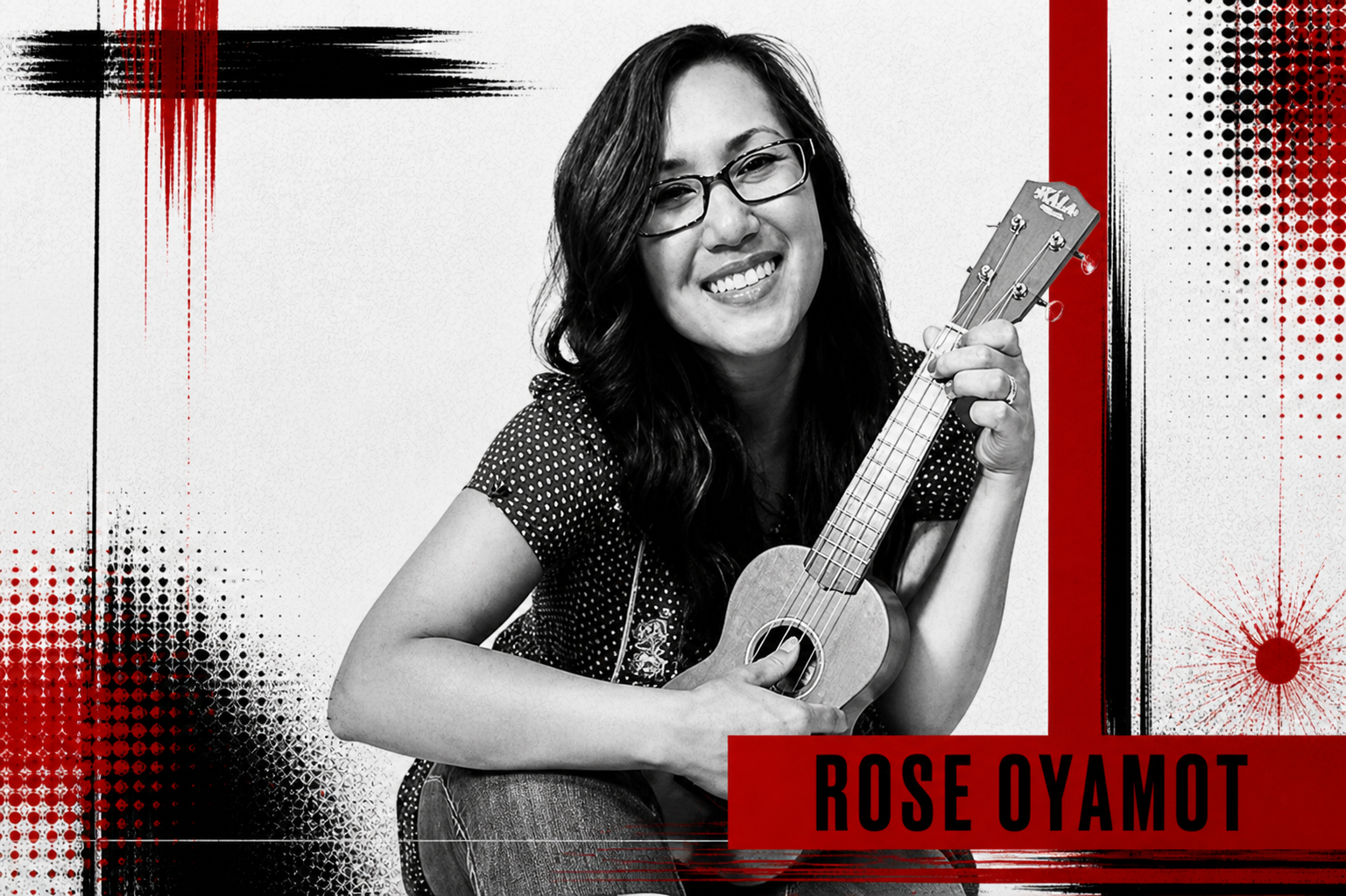
A warm, community-centered blend of children’s music, storytelling, and cultural expression defines the work of Rose Oyamot, an artist who found her voice through the intersection of education and performance. Previously known as Honeysuckle Rose, her musical direction evolved alongside her work in public libraries, where she began shaping songs specifically for young audiences. This transition reflects a shift from traditional performance toward music with a clear purpose—engagement, learning, and connection.
Her journey into children’s music began in 2015 while working as a Children’s Specialist in a public library, a role that placed her directly within the environment she would come to influence. Drawing from a background in folk, rock, and jazz, she adapted her musical instincts into a format accessible to children, using melody and rhythm as tools for interaction. The ʻukulele became central to this approach, offering a bright, approachable sound that complements the intimacy of storytime settings.
A defining aspect of her work lies in its integration of education and performance, where songs are designed to support early learning, language development, and social interaction. Rather than functioning solely as entertainment, her music operates as a participatory experience, encouraging children to engage through movement, repetition, and call-and-response structures. This emphasis on interaction reinforces the communal nature of her performances.
Cultural identity plays an important role in shaping her sound, particularly through the influence of her Filipina-Hawaiian roots. Elements of the aloha spirit are woven into her music, introducing themes of kindness, connection, and shared experience. These influences add a layer of authenticity and perspective, expanding the scope of children’s music beyond standard educational frameworks.
Her project, ʻUkulele Storytime with Rose Lani, extends this philosophy into the digital space, where video content brings storytime sessions, tutorials, and interactive music experiences to a broader audience. Through this platform, she not only reaches children and families directly but also provides resources for educators, librarians, and caregivers looking to incorporate music into their own programming. The channel’s steady growth reflects a wider demand for accessible, music-based learning tools.
Live performance remains a central component of her work, particularly across libraries, festivals, and community events throughout Minnesota and beyond. These settings reinforce the immediacy of her approach, where the connection between performer and audience becomes part of the experience itself. The portability of the ʻukulele and the simplicity of her arrangements allow her to adapt easily to different environments while maintaining consistency.
A key element of her artistry is clarity—both musically and conceptually—where each song is constructed with a specific purpose in mind. Lyrics are direct and engaging, melodies are easy to follow, and structures are designed for participation. This intentionality ensures that her music remains effective within its educational context while still feeling organic and enjoyable.
Her influence can be seen in the growing movement of educators and performers who integrate music into early childhood development, particularly within library systems and community programming. By demonstrating how simple instruments and thoughtful songwriting can create meaningful engagement, she contributes to a broader understanding of music as a developmental tool.
Across both live and digital formats, her work maintains a consistent focus on accessibility and connection, ensuring that children, educators, and families can engage with the material regardless of setting. This adaptability reflects a broader shift toward hybrid models of learning and performance in contemporary children’s media.
Rose Oyamot’s work stands as a reflection of music’s ability to connect, teach, and inspire at an early stage, illustrating how creative expression can be shaped by community needs and cultural perspective. Her continued growth across platforms and performances highlights a path defined not by scale alone, but by impact—measured through participation, learning, and shared experience.