
ArtistDirect News
AI-Powered Music Video Generators Democratize Visual Promotion for Independent Artists
In the streaming‑first era, a track’s fate often hinges on more than just its melody. A compelling visual can lift a song from algorithmic obscurity to playlist prominence, driving discovery, engagement, and brand identity.
Traditional music‑video production is a costly, time‑consuming endeavor. It requires cameras, lighting rigs, location permits, a director, an editor, and sometimes actors—expenses that can run into the thousands and weeks of coordination.
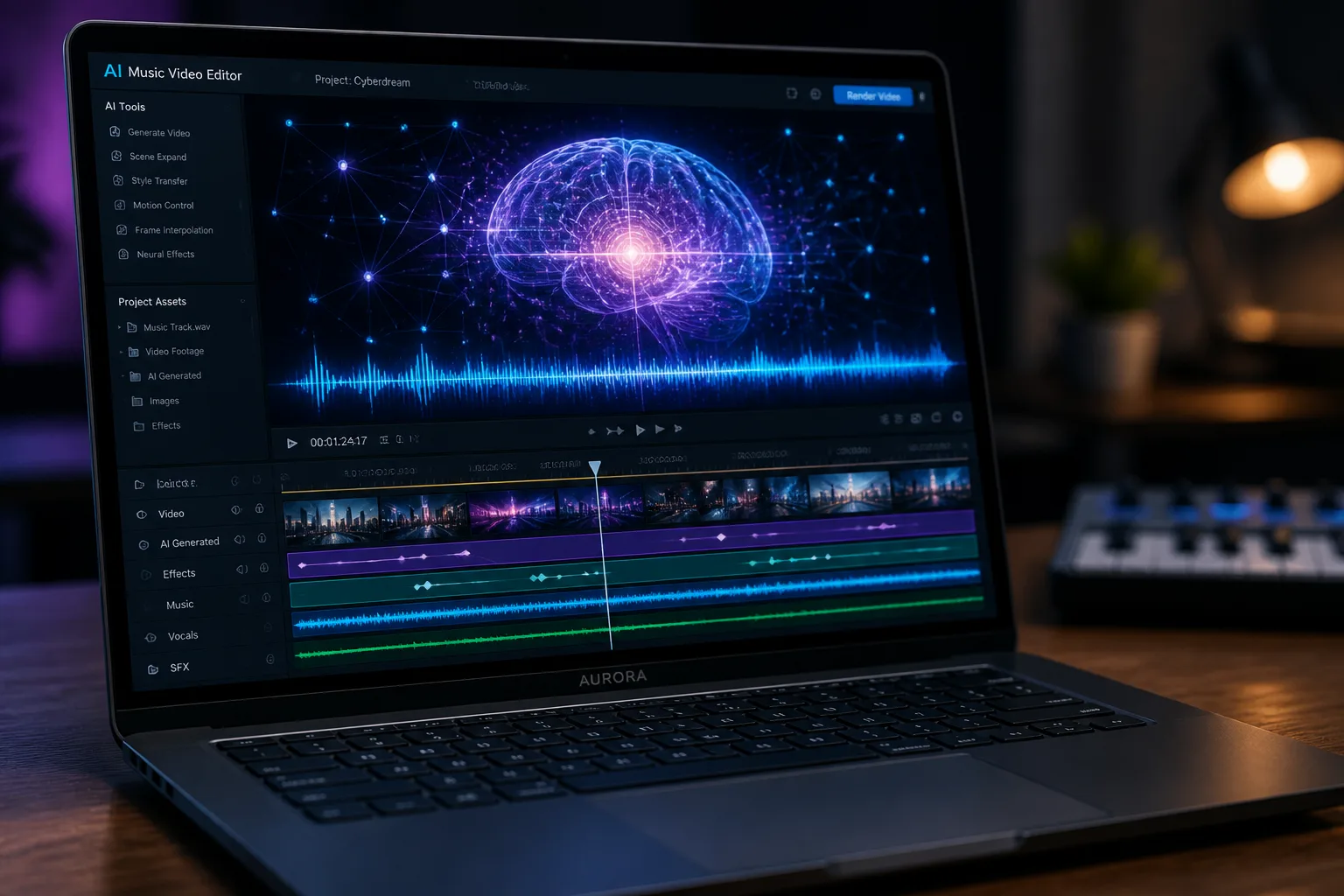
Enter AI‑driven platforms such as Renderforest’s AI Video Generator, Freebeat, and VidMuse. These services let creators upload a track, select a style, and generate a polished video in minutes. The algorithms parse the audio, sync visual motifs to rhythm and mood, and automatically apply transitions, animations, and visual effects. The outcome is a professional‑looking video ready for YouTube, TikTok, Instagram Reels, or Facebook, all without a production crew.
The advantages are measurable. First, cost efficiency: independent musicians no longer need to hire a full crew or rent studio space. Second, speed: a project that would traditionally take weeks can be completed in a single session, enabling artists to capitalize on promotional windows or viral trends. Third, accessibility: intuitive interfaces and automated workflows lower the technical barrier, allowing users with little or no editing experience to produce high‑quality content.
Beyond official videos, AI generators support lyric videos, visualizers, short‑form teasers, and promotional clips for album releases or tour announcements. Platforms like TikTok and Instagram Reels favor bite‑size, engaging visuals, and AI tools can produce platform‑optimized formats in seconds. Artists can experiment with animated, abstract, or narrative aesthetics without incurring additional costs.
The impact on independent promotion is significant. Historically, limited budgets have constrained artists from producing frequent visual content, hampering discoverability on video‑centric platforms. AI‑generated videos level the playing field by enabling consistent output, expanding global reach, and allowing musicians to test creative approaches with minimal financial risk.
Industry observers note emerging trends that build on current AI capabilities. Future systems may offer personalized visual experiences tailored to individual viewers, improve synchronization precision through advanced machine learning, and introduce interactive elements that let audiences influence the video’s flow. Cross‑platform optimization—automatic resizing and formatting for YouTube, TikTok, Instagram, and Facebook—will further streamline the workflow.
While AI removes many technical hurdles, strategic planning remains essential. Artists should begin with a clear vision, match visuals to the song’s emotional tone, use high‑quality source assets, and consider platform requirements. Maintaining brand consistency across videos reinforces an artist’s identity, and testing audience reactions can guide future content decisions.
In sum, AI‑powered music‑video generators are reshaping how musicians create visual content. They cut costs, accelerate production, and broaden creative possibilities, especially for independent artists who once faced steep barriers. As the technology matures, it is poised to become an integral tool in the music industry’s visual marketing arsenal, helping artists stand out in an increasingly crowded digital landscape.
Traditional music‑video production is a costly, time‑consuming endeavor. It requires cameras, lighting rigs, location permits, a director, an editor, and sometimes actors—expenses that can run into the thousands and weeks of coordination.
Enter AI‑driven platforms such as Renderforest’s AI Video Generator, Freebeat, and VidMuse. These services let creators upload a track, select a style, and generate a polished video in minutes. The algorithms parse the audio, sync visual motifs to rhythm and mood, and automatically apply transitions, animations, and visual effects. The outcome is a professional‑looking video ready for YouTube, TikTok, Instagram Reels, or Facebook, all without a production crew.
The advantages are measurable. First, cost efficiency: independent musicians no longer need to hire a full crew or rent studio space. Second, speed: a project that would traditionally take weeks can be completed in a single session, enabling artists to capitalize on promotional windows or viral trends. Third, accessibility: intuitive interfaces and automated workflows lower the technical barrier, allowing users with little or no editing experience to produce high‑quality content.
Beyond official videos, AI generators support lyric videos, visualizers, short‑form teasers, and promotional clips for album releases or tour announcements. Platforms like TikTok and Instagram Reels favor bite‑size, engaging visuals, and AI tools can produce platform‑optimized formats in seconds. Artists can experiment with animated, abstract, or narrative aesthetics without incurring additional costs.
The impact on independent promotion is significant. Historically, limited budgets have constrained artists from producing frequent visual content, hampering discoverability on video‑centric platforms. AI‑generated videos level the playing field by enabling consistent output, expanding global reach, and allowing musicians to test creative approaches with minimal financial risk.
Industry observers note emerging trends that build on current AI capabilities. Future systems may offer personalized visual experiences tailored to individual viewers, improve synchronization precision through advanced machine learning, and introduce interactive elements that let audiences influence the video’s flow. Cross‑platform optimization—automatic resizing and formatting for YouTube, TikTok, Instagram, and Facebook—will further streamline the workflow.
While AI removes many technical hurdles, strategic planning remains essential. Artists should begin with a clear vision, match visuals to the song’s emotional tone, use high‑quality source assets, and consider platform requirements. Maintaining brand consistency across videos reinforces an artist’s identity, and testing audience reactions can guide future content decisions.
In sum, AI‑powered music‑video generators are reshaping how musicians create visual content. They cut costs, accelerate production, and broaden creative possibilities, especially for independent artists who once faced steep barriers. As the technology matures, it is poised to become an integral tool in the music industry’s visual marketing arsenal, helping artists stand out in an increasingly crowded digital landscape.