
ArtistDirect News
Vancouver Expands Live-Music Landscape Ahead of 2026 World Cup
The 2026 FIFA World Cup has become a catalyst for Vancouver’s live‑music scene, prompting a wave of investment that is reshaping the city’s entertainment infrastructure.
On June 5, the Freedom Mobile Arch opened its doors at the Pacific National Exhibition (PNE) grounds, a 10,000‑seat venue that eclipses the capacity of the city’s older theatres and is the largest new construction on the PNE site since the Pacific Coliseum in 1968. The Arch fills a long‑standing void between the intimate 2,672‑seat Orpheum and Queen Elizabeth Theatre and the larger Pacific Coliseum (17,500 seats) and Rogers Arena (19,000 seats). Brand Live Management Group’s founding partner Paul Runnals, who also serves as executive producer of the FIFA Fan Festival that will be staged at the Arch, said the venue is “seasonally” usable for mid‑ to upper‑level acts and that “always great to have more options for venues.”
The project’s cost ballooned from the original $64.8 million estimate presented to city council in 2021 to an estimated $183 million. The surge was largely driven by geotechnical testing that uncovered 60 times more water than expected, necessitating additional concrete and engineering work. PNE CEO Shelley Frost explained that the city’s contribution now covers most of the construction costs, while the PNE will repay $110 million over 20 years. Freedom Mobile supplied “millions” of dollars for naming rights.
The opening gala featured Jann Arden and Colin James, and Frost called the event “spectacular.” She noted that industry promoters were impressed by the venue’s design and acoustics, and that the open‑air layout incorporates sound‑spillage controls to keep noise outside the venue at acceptable levels.
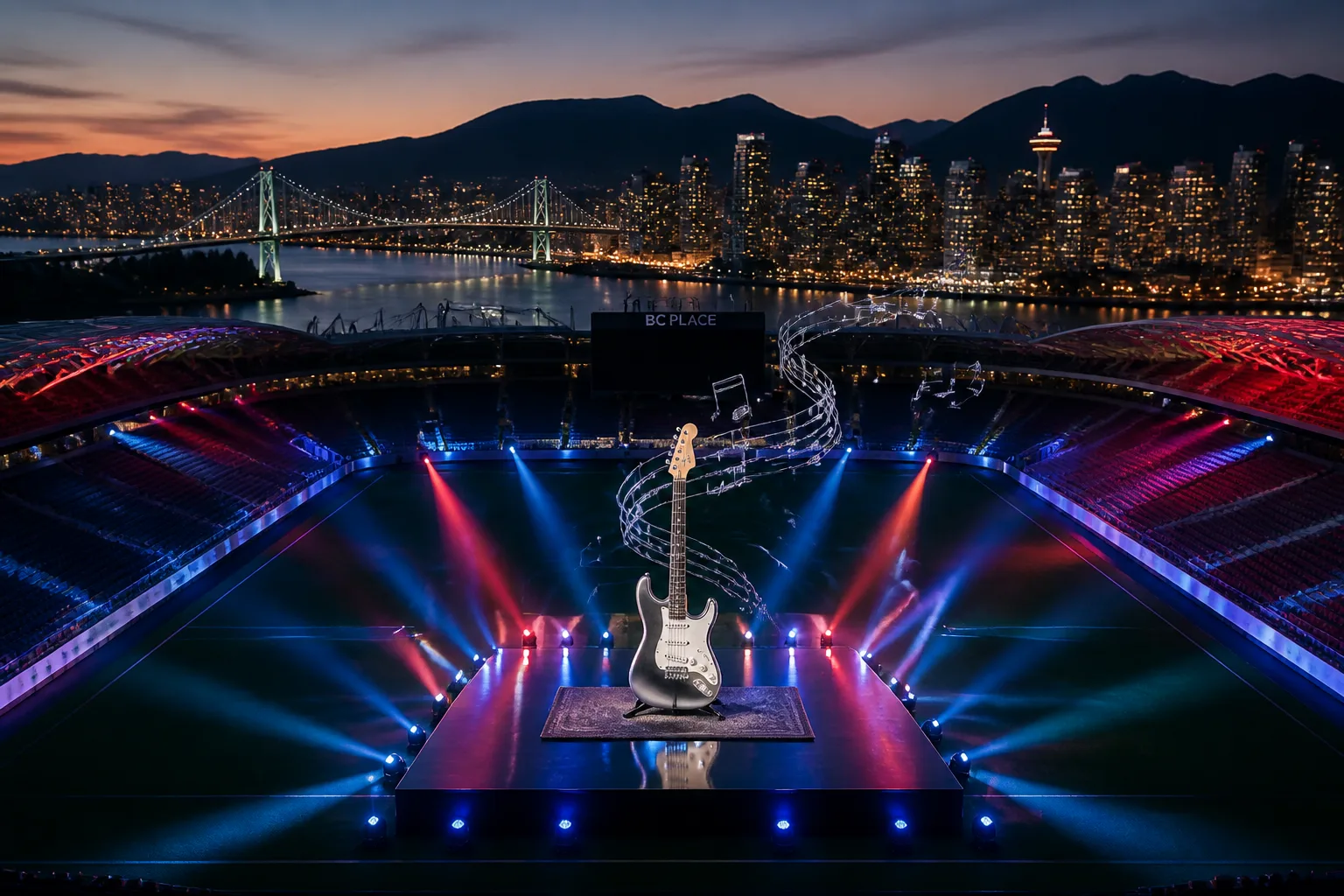
BC Place Stadium received a $196 million upgrade package that added new field‑side club suites, upgraded Level 3 hospitality areas, and a new merchandise store. General manager Chris May highlighted the new Corner Club suite, which can seat hundreds and, together with nearby group suites, could host conferences for up to 500 people. Although the Corner Club is not intended for live bands, BC Place remains a concert venue, offering premium seating.
Smaller venues have also benefited from investment. Rickshaw Theatre owner Mo Tarmohamed spent roughly $100 k during the pandemic to upgrade sound, lighting, and acoustic panels, with additional funding from Creative BC grants. The 600‑seat theatre generates revenue through contracted performances, flat‑fee rentals, and event planning, and Tarmohamed books acts for other local venues such as the Cobalt Cabaret, Fox, Wise Hall, and LanaLou’s Restaurant.
The Imperial Theatre closed in late 2022 after safety concerns and a 2023 fire made demolition inevitable. Historian Aaron Chapman described its loss as a blow to downtown Eastside nightlife. In contrast, the Hollywood Theatre in Kitsilano reopened after a 2018 renovation approved by the city. The venue hosted free watch parties during the World Cup and is now owned by Dayhu Group, which plans further development around the nearby Commodore Ballroom.
Chapman stresses the need for a dedicated all‑ages venue in Vancouver, citing the high cost of living and real‑estate pressures that have challenged downtown entertainment spaces. He notes that the last “golden age” for live‑music venues was in the 1990s.
Malkin Bowl, a Park Board‑owned outdoor venue in Stanley Park, remains in use for Theatre Under The Stars and private events. Runnals argues that the 85‑year‑old technical infrastructure and poor drainage require a major upgrade or replacement. He suggests that a new design could accommodate both theatre and concert programming.
Taken together, Vancouver’s expanded venue options—from the 10,000‑seat Freedom Mobile Arch to upgraded BC Place and revitalized smaller theatres—position the city to host a broader spectrum of live‑music events in the lead‑up to and beyond the 2026 FIFA World Cup.
On June 5, the Freedom Mobile Arch opened its doors at the Pacific National Exhibition (PNE) grounds, a 10,000‑seat venue that eclipses the capacity of the city’s older theatres and is the largest new construction on the PNE site since the Pacific Coliseum in 1968. The Arch fills a long‑standing void between the intimate 2,672‑seat Orpheum and Queen Elizabeth Theatre and the larger Pacific Coliseum (17,500 seats) and Rogers Arena (19,000 seats). Brand Live Management Group’s founding partner Paul Runnals, who also serves as executive producer of the FIFA Fan Festival that will be staged at the Arch, said the venue is “seasonally” usable for mid‑ to upper‑level acts and that “always great to have more options for venues.”
The project’s cost ballooned from the original $64.8 million estimate presented to city council in 2021 to an estimated $183 million. The surge was largely driven by geotechnical testing that uncovered 60 times more water than expected, necessitating additional concrete and engineering work. PNE CEO Shelley Frost explained that the city’s contribution now covers most of the construction costs, while the PNE will repay $110 million over 20 years. Freedom Mobile supplied “millions” of dollars for naming rights.
The opening gala featured Jann Arden and Colin James, and Frost called the event “spectacular.” She noted that industry promoters were impressed by the venue’s design and acoustics, and that the open‑air layout incorporates sound‑spillage controls to keep noise outside the venue at acceptable levels.
BC Place Stadium received a $196 million upgrade package that added new field‑side club suites, upgraded Level 3 hospitality areas, and a new merchandise store. General manager Chris May highlighted the new Corner Club suite, which can seat hundreds and, together with nearby group suites, could host conferences for up to 500 people. Although the Corner Club is not intended for live bands, BC Place remains a concert venue, offering premium seating.
Smaller venues have also benefited from investment. Rickshaw Theatre owner Mo Tarmohamed spent roughly $100 k during the pandemic to upgrade sound, lighting, and acoustic panels, with additional funding from Creative BC grants. The 600‑seat theatre generates revenue through contracted performances, flat‑fee rentals, and event planning, and Tarmohamed books acts for other local venues such as the Cobalt Cabaret, Fox, Wise Hall, and LanaLou’s Restaurant.
The Imperial Theatre closed in late 2022 after safety concerns and a 2023 fire made demolition inevitable. Historian Aaron Chapman described its loss as a blow to downtown Eastside nightlife. In contrast, the Hollywood Theatre in Kitsilano reopened after a 2018 renovation approved by the city. The venue hosted free watch parties during the World Cup and is now owned by Dayhu Group, which plans further development around the nearby Commodore Ballroom.
Chapman stresses the need for a dedicated all‑ages venue in Vancouver, citing the high cost of living and real‑estate pressures that have challenged downtown entertainment spaces. He notes that the last “golden age” for live‑music venues was in the 1990s.
Malkin Bowl, a Park Board‑owned outdoor venue in Stanley Park, remains in use for Theatre Under The Stars and private events. Runnals argues that the 85‑year‑old technical infrastructure and poor drainage require a major upgrade or replacement. He suggests that a new design could accommodate both theatre and concert programming.
Taken together, Vancouver’s expanded venue options—from the 10,000‑seat Freedom Mobile Arch to upgraded BC Place and revitalized smaller theatres—position the city to host a broader spectrum of live‑music events in the lead‑up to and beyond the 2026 FIFA World Cup.