
ArtistDirect News
10 Iconic UK Recording Studios and the Legendary Songs They Produced
Picture a hidden room where a future anthem is born, the walls echoing with the pulse of history. In the United Kingdom, a handful of studios have become sanctuaries for the songs that defined generations.
Rockfield Studios sits in the misty Wye Valley of Monmouthshire. The Ward brothers—Kingsley and Charles—transformed a former breeding centre into a residential studio in 1963. In August 1975, Queen arrived in Studio 1, where the opening bars of “Bohemian Rhapsody” were captured on the Blüthner grand piano. Hours of vocal overdubs followed, and Brian May took his mid‑section guitar solo to the farmhouse’s back porch, a setting that would become part of the song’s myth.
Ridge Farm Studio, a 17th‑century barn in West Sussex, operated from 1975 until its closure in 2003. The rustic space attracted acts such as Roxy Music and Muse. In 1980, Ozzy Osbourne, fresh from leaving Black Sabbath, recorded the first single of his debut solo album, “Crazy Train.” Guitarist Randy Rhoads laid down the riff and solo that would crystallise early heavy metal’s signature sound.
Wizard Studios in Belfast, founded by engineer Davy Smyth in 1973 and running until 1980, became a hub for the local punk scene. The Undertones recorded their 1979 single “Teenage Kicks” there for a modest £200 budget. Released on the Good Vibrations label, the track later gained international recognition.
The Chapel—once a Victorian church in Lincolnshire—was converted into a studio in 1982 by Andy Dransfield and later expanded by Bram Tchaikovsky. The indie revival found a home here when Arctic Monkeys recorded most of their debut album, Whatever People Say I Am, That’s What I’m Not, in a two‑week session. The single “I Bet You Look Good on the Dancefloor” was captured in a single room, with Alex Turner’s vocals overdubbed separately.
Sawmills Studios, perched on the banks of the River Fowey in Cornwall, is famed for its remote setting. In 1989 the Stone Roses recorded “Fool’s Gold” there, a track that evolved from a B‑side into a full‑length psychedelic piece. The band spent four months in the studio, and the session was later documented on the 2009 deluxe reissue of their debut album.
The Manor in Oxfordshire—a former 18th‑century manor house—became a recording venue in the 1970s. Virgin Records founder Richard Branson used the facility for progressive acts such as Magma and Faust. Mike Oldfield’s debut album Tubular Bells was recorded there, reaching number one on the UK charts and later featured in the film The Exorcist.
The Wool Hall in Somerset, a 16th‑century hall in Beckington, was refurbished in the 1980s and served as a residential studio. Tears for Fears used the space for Songs from the Big Chair, while the Smiths recorded their 1987 single “Stop Me If You Think You’ve Heard This One Before” there. Guitarist Johnny Marr layered the track’s distinctive sound with a Fender Telecaster and a Twin Reverb amplifier.
Strawberry Studios—originally Inter‑City Studios in Stockport—was renamed by 10cc members Eric Stewart and Graham Gouldman. The studio hosted Joy Division’s 1980 single “Love Will Tear Us Apart,” recorded with producer Martin Hannett. The track was mixed at Strawberry after an earlier attempt at Penine Sound Studios in Oldham.
Headley Grange, a former workhouse in Hampshire, became a recording venue in the 1960s. Led Zeppelin captured parts of Physical Graffiti there, most notably the blues cover “When the Levee Breaks.” John Bonham’s drum track was recorded in the building’s lobby using two suspended microphones, then processed with compressors and delays.
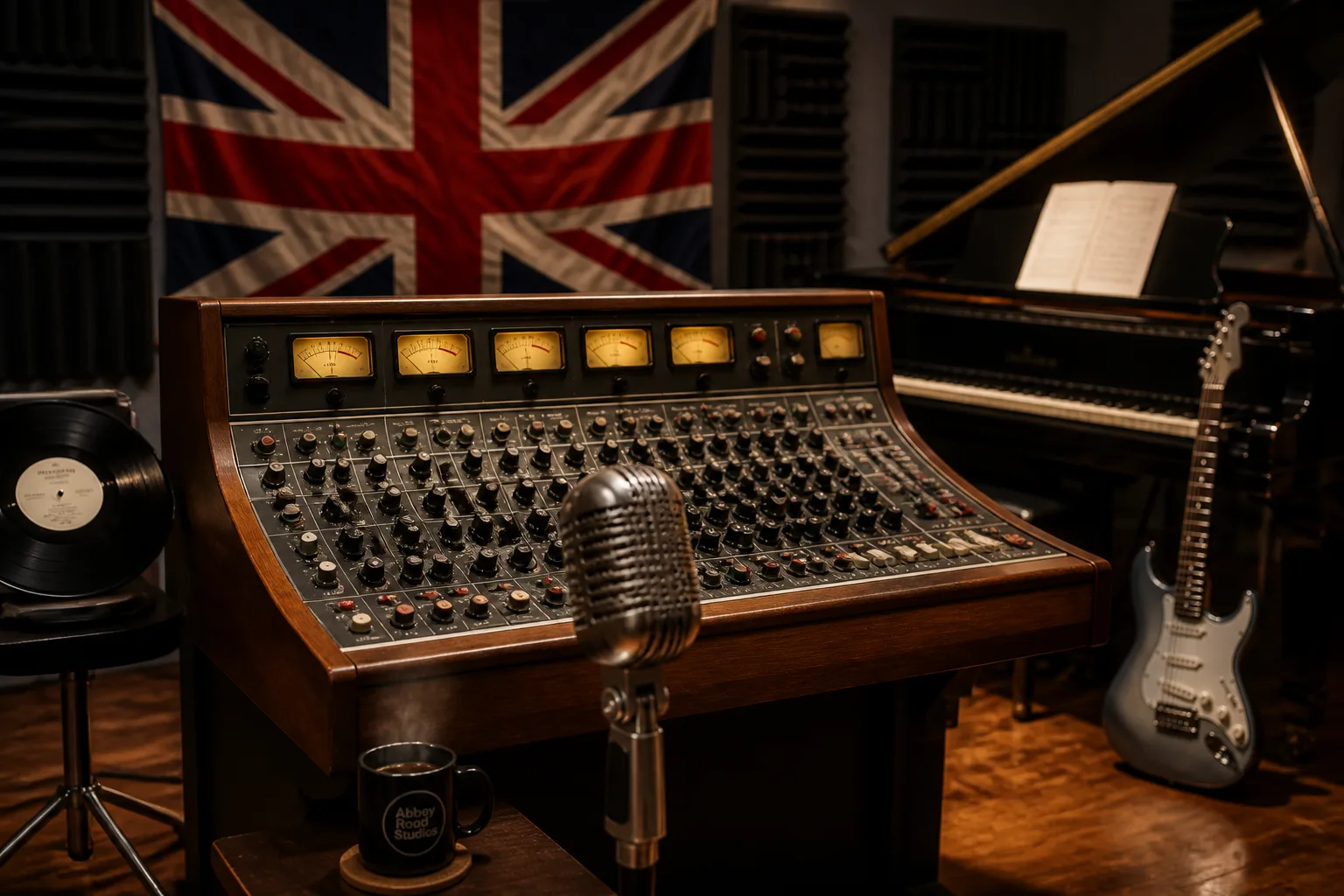
Abbey Road Studios in London—originally an EMI studio built in 1931—is perhaps the world’s most famous recording site. The Beatles recorded “Strawberry Fields Forever” there in 1966, employing Mellotrons, tape effects, and reverse cymbals. The single was released as a double A‑side with “Penny Lane” in February 1967 and remains one of the band’s most celebrated works.
These studios illustrate how a place’s character, its gear, and its community can shape the sound of a generation. Each facility’s unique ambience has helped artists translate fleeting ideas into recordings that endure.
Rockfield Studios sits in the misty Wye Valley of Monmouthshire. The Ward brothers—Kingsley and Charles—transformed a former breeding centre into a residential studio in 1963. In August 1975, Queen arrived in Studio 1, where the opening bars of “Bohemian Rhapsody” were captured on the Blüthner grand piano. Hours of vocal overdubs followed, and Brian May took his mid‑section guitar solo to the farmhouse’s back porch, a setting that would become part of the song’s myth.
Ridge Farm Studio, a 17th‑century barn in West Sussex, operated from 1975 until its closure in 2003. The rustic space attracted acts such as Roxy Music and Muse. In 1980, Ozzy Osbourne, fresh from leaving Black Sabbath, recorded the first single of his debut solo album, “Crazy Train.” Guitarist Randy Rhoads laid down the riff and solo that would crystallise early heavy metal’s signature sound.
Wizard Studios in Belfast, founded by engineer Davy Smyth in 1973 and running until 1980, became a hub for the local punk scene. The Undertones recorded their 1979 single “Teenage Kicks” there for a modest £200 budget. Released on the Good Vibrations label, the track later gained international recognition.
The Chapel—once a Victorian church in Lincolnshire—was converted into a studio in 1982 by Andy Dransfield and later expanded by Bram Tchaikovsky. The indie revival found a home here when Arctic Monkeys recorded most of their debut album, Whatever People Say I Am, That’s What I’m Not, in a two‑week session. The single “I Bet You Look Good on the Dancefloor” was captured in a single room, with Alex Turner’s vocals overdubbed separately.
Sawmills Studios, perched on the banks of the River Fowey in Cornwall, is famed for its remote setting. In 1989 the Stone Roses recorded “Fool’s Gold” there, a track that evolved from a B‑side into a full‑length psychedelic piece. The band spent four months in the studio, and the session was later documented on the 2009 deluxe reissue of their debut album.
The Manor in Oxfordshire—a former 18th‑century manor house—became a recording venue in the 1970s. Virgin Records founder Richard Branson used the facility for progressive acts such as Magma and Faust. Mike Oldfield’s debut album Tubular Bells was recorded there, reaching number one on the UK charts and later featured in the film The Exorcist.
The Wool Hall in Somerset, a 16th‑century hall in Beckington, was refurbished in the 1980s and served as a residential studio. Tears for Fears used the space for Songs from the Big Chair, while the Smiths recorded their 1987 single “Stop Me If You Think You’ve Heard This One Before” there. Guitarist Johnny Marr layered the track’s distinctive sound with a Fender Telecaster and a Twin Reverb amplifier.
Strawberry Studios—originally Inter‑City Studios in Stockport—was renamed by 10cc members Eric Stewart and Graham Gouldman. The studio hosted Joy Division’s 1980 single “Love Will Tear Us Apart,” recorded with producer Martin Hannett. The track was mixed at Strawberry after an earlier attempt at Penine Sound Studios in Oldham.
Headley Grange, a former workhouse in Hampshire, became a recording venue in the 1960s. Led Zeppelin captured parts of Physical Graffiti there, most notably the blues cover “When the Levee Breaks.” John Bonham’s drum track was recorded in the building’s lobby using two suspended microphones, then processed with compressors and delays.
Abbey Road Studios in London—originally an EMI studio built in 1931—is perhaps the world’s most famous recording site. The Beatles recorded “Strawberry Fields Forever” there in 1966, employing Mellotrons, tape effects, and reverse cymbals. The single was released as a double A‑side with “Penny Lane” in February 1967 and remains one of the band’s most celebrated works.
These studios illustrate how a place’s character, its gear, and its community can shape the sound of a generation. Each facility’s unique ambience has helped artists translate fleeting ideas into recordings that endure.