ArtistDirect News
Avenged Sevenfolds M. Shadows Declares Record Labels Obsolete After Buying Back Master Rights
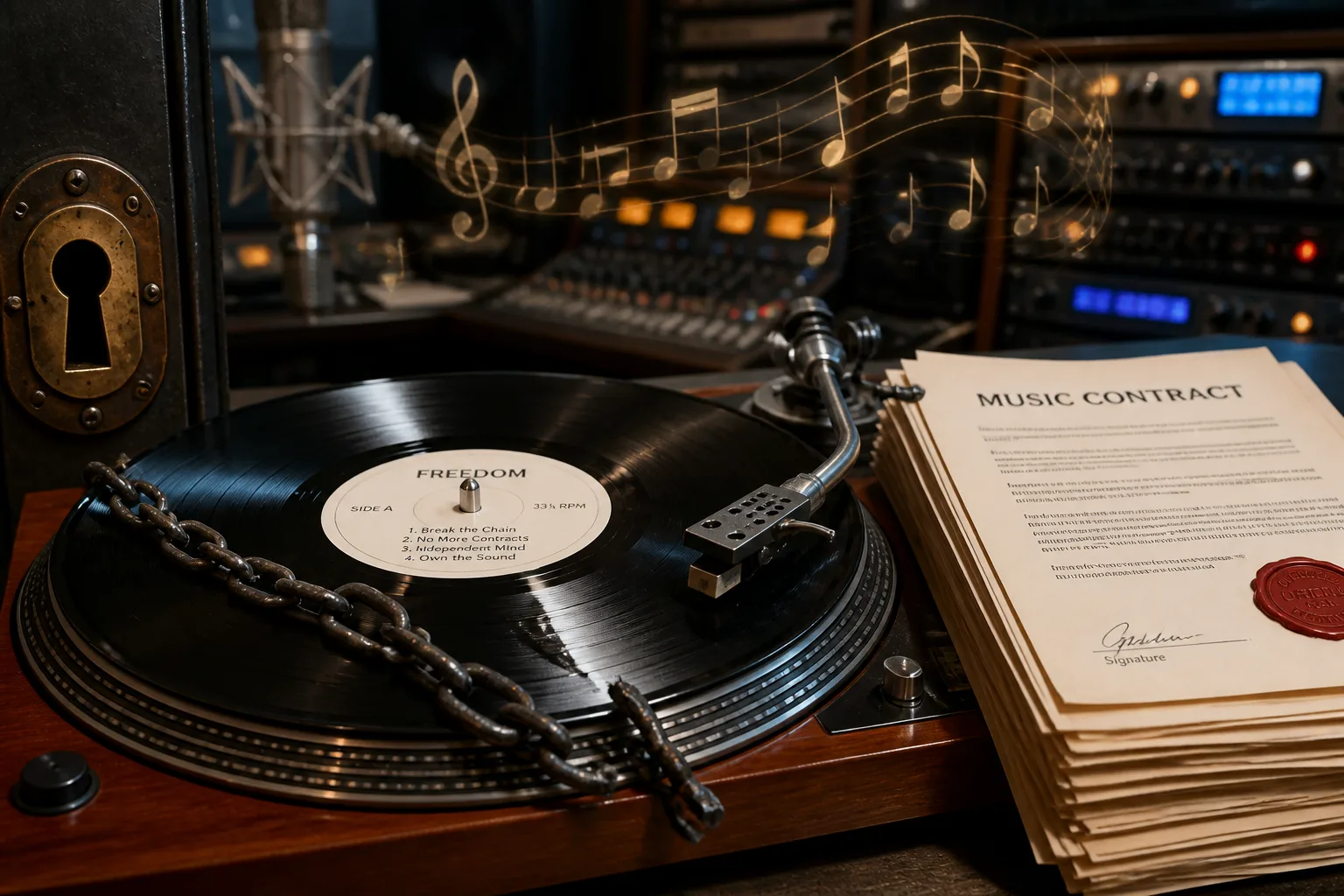
M. Shadows, the lead vocalist of Huntington Beach metal band Avenged Sevenfold, has issued a stark warning to the industry: record labels are no longer worth the effort. In a bold move earlier this year, the group bought the master recordings of its 2016 concept album The Stage from Capitol Records, severing a 26‑year partnership with a major label and marking the first time the band has operated entirely independently since its 1999 formation.
In a candid interview with MusicTech, Shadows explained the motivation behind reclaiming the masters. "You’re going to take 24 cents on our dollar and that’s all you can do, come up with a f**king fake viral TikTok moment?" he said. The remark underscores a long‑standing frustration with the low return artists often receive under traditional label deals. "Because of the way the music industry is now, we just don’t see a point of ever being on a label again. They really can’t do much for you," he added.
The Stage—released in October 2016 through Capitol after a legal dispute that ended Avenged Sevenfold’s 11‑year run with Warner Bros.—debuted at number four on the Billboard 200 and was the band’s first full‑length concept record. Its 15‑minute title track showcased a progressive metal direction that had not appeared on previous releases. Although the group returned to Warner Bros. for later projects, the 2026 master‑rights buy‑back represents a definitive break from the major‑label system.
Shadows also highlighted the erosion of traditional promotional avenues. "Labels once paid for radio play, end‑cap placement in stores, and MTV air time—practices that I describe as payola. Today, the band can upload music to YouTube or TikTok and tour directly, often earning more from a single show than the cost of producing a record," he said. "Now it’s all gone. Now I upload something on YouTube and on TikTok, and I can go play shows. I can make more money in one show than it would cost to make a record, and when they give you the money, you’re paying four times what that money is to get it back."
He urged emerging artists to consider the same path. "People are still very late to move,” he said. “They’re looking at it going, ‘Well, it’s really cool to tell my grandparents that I’m on Universal, but really Universal gives you $25,000, you have to make $100,000 to pay that back… And so if you can afford it yourself, you should do it yourself."
While acknowledging the role of radio and MTV in the band’s early success, Shadows criticized the creative constraints they imposed. "When you have radio stations and MTV, you get a lot of favourites being played because this worked so go make more stuff like that,” he said. "And there’s not a lot of creativity there. It’s basically based on what people are listening to. And so the art form really becomes a full‑on product. And that’s not really what music should be. It should be a free expression."
Beyond label independence, Avenged Sevenfold has experimented with fan engagement on its own terms. In 2021, the band launched the NFT‑based Deathbats Club, offering early access to tickets, exclusive merchandise, and digital collectibles. The group also runs Deathbat Rewards, a loyalty program that lets fans earn points by listening to music, buying merch and attending shows, which can be redeemed for perks.
The band’s most recent release, the surprise EP STATICA, dropped on July 23 2026. The four‑track record—“LIGHTS,” “STATICA,” “REJOICE,” and “ASHES”—marks a departure from the twin‑guitar, earworm style that has defined much of Avenged Sevenfold’s catalog. Critics describe the EP as psychedelic, experimental and progressive rock, a direction that has divided listeners but demonstrates the band’s willingness to explore new sonic territory.
With the master‑rights acquisition, the independent fan‑club model, and a willingness to experiment musically, Avenged Sevenfold’s current trajectory reflects a broader trend toward artist autonomy. Their actions and statements provide a concrete example of how a major act can navigate the changing landscape of music distribution, promotion and fan engagement without the backing of a traditional label.
The band’s next public appearance is scheduled for August 1 2026 at the Hollywood Casino Amphitheatre in Maryland Heights, Missouri, where it will perform a mix of new material and classic tracks. The move to independence and the release of STATICA have positioned Avenged Sevenfold as a case study in the evolving relationship between artists and the record‑label system.
In a candid interview with MusicTech, Shadows explained the motivation behind reclaiming the masters. "You’re going to take 24 cents on our dollar and that’s all you can do, come up with a f**king fake viral TikTok moment?" he said. The remark underscores a long‑standing frustration with the low return artists often receive under traditional label deals. "Because of the way the music industry is now, we just don’t see a point of ever being on a label again. They really can’t do much for you," he added.
The Stage—released in October 2016 through Capitol after a legal dispute that ended Avenged Sevenfold’s 11‑year run with Warner Bros.—debuted at number four on the Billboard 200 and was the band’s first full‑length concept record. Its 15‑minute title track showcased a progressive metal direction that had not appeared on previous releases. Although the group returned to Warner Bros. for later projects, the 2026 master‑rights buy‑back represents a definitive break from the major‑label system.
Shadows also highlighted the erosion of traditional promotional avenues. "Labels once paid for radio play, end‑cap placement in stores, and MTV air time—practices that I describe as payola. Today, the band can upload music to YouTube or TikTok and tour directly, often earning more from a single show than the cost of producing a record," he said. "Now it’s all gone. Now I upload something on YouTube and on TikTok, and I can go play shows. I can make more money in one show than it would cost to make a record, and when they give you the money, you’re paying four times what that money is to get it back."
He urged emerging artists to consider the same path. "People are still very late to move,” he said. “They’re looking at it going, ‘Well, it’s really cool to tell my grandparents that I’m on Universal, but really Universal gives you $25,000, you have to make $100,000 to pay that back… And so if you can afford it yourself, you should do it yourself."
While acknowledging the role of radio and MTV in the band’s early success, Shadows criticized the creative constraints they imposed. "When you have radio stations and MTV, you get a lot of favourites being played because this worked so go make more stuff like that,” he said. "And there’s not a lot of creativity there. It’s basically based on what people are listening to. And so the art form really becomes a full‑on product. And that’s not really what music should be. It should be a free expression."
Beyond label independence, Avenged Sevenfold has experimented with fan engagement on its own terms. In 2021, the band launched the NFT‑based Deathbats Club, offering early access to tickets, exclusive merchandise, and digital collectibles. The group also runs Deathbat Rewards, a loyalty program that lets fans earn points by listening to music, buying merch and attending shows, which can be redeemed for perks.
The band’s most recent release, the surprise EP STATICA, dropped on July 23 2026. The four‑track record—“LIGHTS,” “STATICA,” “REJOICE,” and “ASHES”—marks a departure from the twin‑guitar, earworm style that has defined much of Avenged Sevenfold’s catalog. Critics describe the EP as psychedelic, experimental and progressive rock, a direction that has divided listeners but demonstrates the band’s willingness to explore new sonic territory.
With the master‑rights acquisition, the independent fan‑club model, and a willingness to experiment musically, Avenged Sevenfold’s current trajectory reflects a broader trend toward artist autonomy. Their actions and statements provide a concrete example of how a major act can navigate the changing landscape of music distribution, promotion and fan engagement without the backing of a traditional label.
The band’s next public appearance is scheduled for August 1 2026 at the Hollywood Casino Amphitheatre in Maryland Heights, Missouri, where it will perform a mix of new material and classic tracks. The move to independence and the release of STATICA have positioned Avenged Sevenfold as a case study in the evolving relationship between artists and the record‑label system.