ArtistDirect News
T-Pain Sells Catalog to HarbourView Equity for $100 Million, Citing Streaming Devaluation
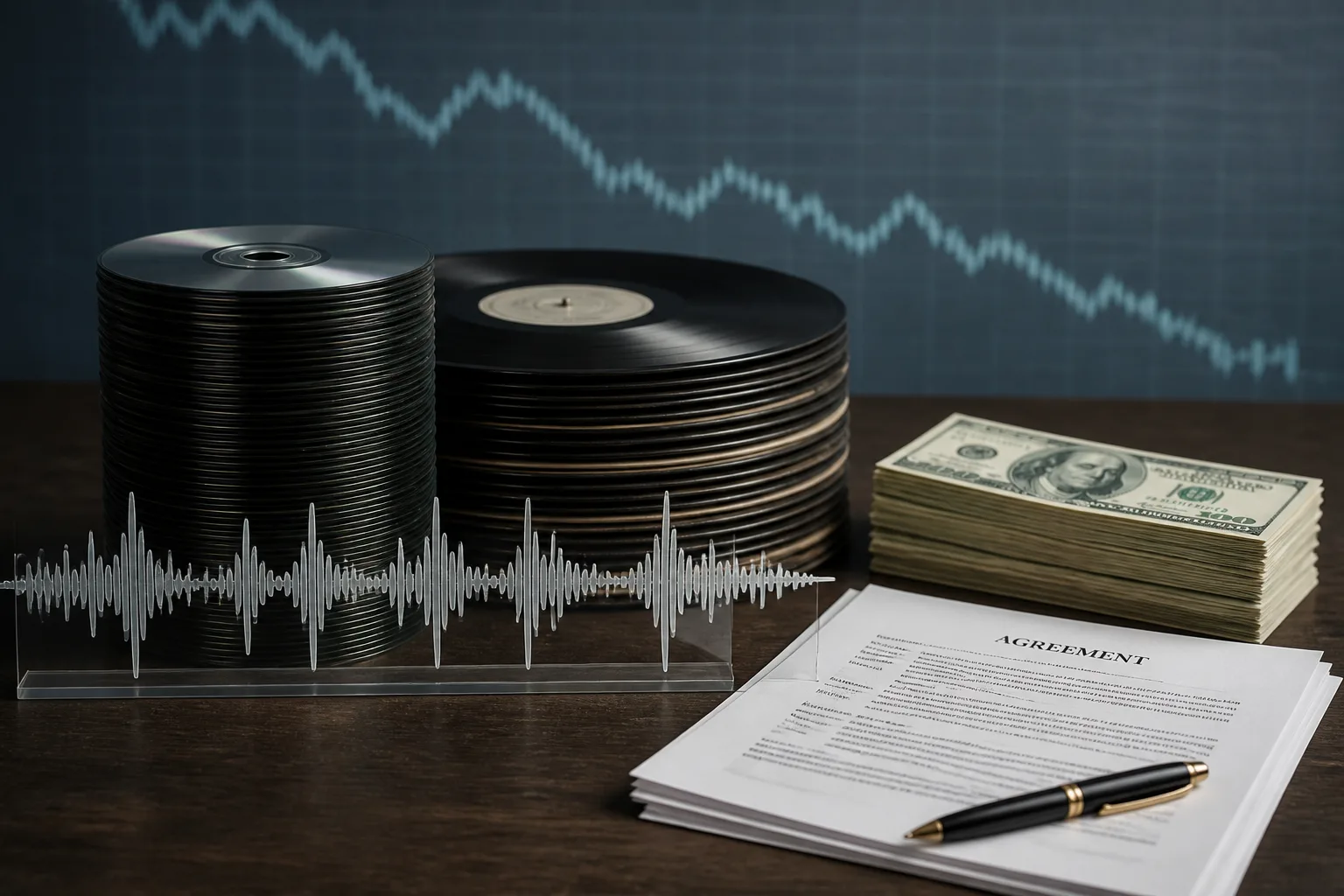
In a headline‑making move that reshaped the economics of his own legacy, T‑Pain announced the sale of his publishing catalog and select master recordings to HarbourView Equity Partners for a reported $100 million. The deal, disclosed in a February 2025 press release and later confirmed by Variety on February 20 2025, reflects a growing trend of artists turning to private‑equity firms to secure long‑term revenue in an era of declining per‑stream payouts.
HarbourView Equity Partners, a private‑equity firm that has already acquired assets from artists such as Wiz Khalifa and Quincy Jones, will hold the publishing rights and a portion of T‑Pain’s master rights. While the official transaction amount was not released, insiders estimate the value at roughly $100 million. In the announcement statement, T‑Pain said, “I’m excited for this next chapter and to partner with HarbourView Equity as they help preserve the legacy of my music. This catalog represents years of hard work, creativity, and unforgettable moments, and I’m grateful to see it continue to reach new heights. I don’t plan on stopping anytime soon.”
The artist elaborated on the motivations behind the sale during a July 25 2026 Twitch livestream. He explained that the decision was driven by the erosion of streaming revenue and a desire to protect his family’s financial future. “I’m not leaving my kids’ future in the hands of the music industry at all,” he said. “I know exactly how much I would need to live out the rest of my life.” The sale gives T‑Pain a guaranteed income stream and the ability to reinvest in future projects.
A key provision of the agreement extends HarbourView’s ownership to any future compositions T‑Pain creates, including music scores and jingles that could be monetized. T‑Pain revealed this detail in a November 2025 interview with Shannon Sharpe on the Club Shay Shay podcast. He described the deal as an ongoing partnership rather than a one‑time windfall, noting that “the catalog sale also gave HarbourView the right to own any future songs I produce that could be monetized.”
The catalog itself contains chart‑topping hits such as “Buy U a Drank (Shawty Snappin’),” “Low,” and “Good Life,” all of which earned him multiple Grammy nominations. T‑Pain’s pioneering use of Auto‑Tune in the mid‑2000s helped define the rap‑sung style that dominated the decade, and his catalog’s value is anchored by the enduring popularity of those tracks on streaming platforms, even as per‑stream payouts have fallen.
HarbourView’s acquisition strategy hinges on the long‑term revenue potential of publishing rights. By owning the catalog, the firm will collect mechanical royalties, synchronization fees, and performance royalties from the global usage of the songs. The firm has already demonstrated its expertise in managing similar assets, having secured publishing rights for artists like Wiz Khalifa and Quincy Jones.
For T‑Pain, the sale is a strategic move that preserves his legacy while affording him creative freedom. He has indicated that he will continue to record and release new material, but the partnership with HarbourView ensures that his existing catalog remains profitable and well‑managed. The transaction closed in February 2025, and the first royalty payments to T‑Pain are slated to begin in the second quarter of 2025. HarbourView will oversee licensing and royalty collection, while T‑Pain retains the right to perform and release new music under the terms outlined in the November 2025 interview.
In sum, T‑Pain’s $100 million catalog sale to HarbourView Equity Partners illustrates the shifting landscape of music economics. The agreement secures a steady income for the artist, grants HarbourView a valuable asset, and underscores how private‑equity partnerships are becoming an increasingly common vehicle for artists to manage and monetize their intellectual property.
HarbourView Equity Partners, a private‑equity firm that has already acquired assets from artists such as Wiz Khalifa and Quincy Jones, will hold the publishing rights and a portion of T‑Pain’s master rights. While the official transaction amount was not released, insiders estimate the value at roughly $100 million. In the announcement statement, T‑Pain said, “I’m excited for this next chapter and to partner with HarbourView Equity as they help preserve the legacy of my music. This catalog represents years of hard work, creativity, and unforgettable moments, and I’m grateful to see it continue to reach new heights. I don’t plan on stopping anytime soon.”
The artist elaborated on the motivations behind the sale during a July 25 2026 Twitch livestream. He explained that the decision was driven by the erosion of streaming revenue and a desire to protect his family’s financial future. “I’m not leaving my kids’ future in the hands of the music industry at all,” he said. “I know exactly how much I would need to live out the rest of my life.” The sale gives T‑Pain a guaranteed income stream and the ability to reinvest in future projects.
A key provision of the agreement extends HarbourView’s ownership to any future compositions T‑Pain creates, including music scores and jingles that could be monetized. T‑Pain revealed this detail in a November 2025 interview with Shannon Sharpe on the Club Shay Shay podcast. He described the deal as an ongoing partnership rather than a one‑time windfall, noting that “the catalog sale also gave HarbourView the right to own any future songs I produce that could be monetized.”
The catalog itself contains chart‑topping hits such as “Buy U a Drank (Shawty Snappin’),” “Low,” and “Good Life,” all of which earned him multiple Grammy nominations. T‑Pain’s pioneering use of Auto‑Tune in the mid‑2000s helped define the rap‑sung style that dominated the decade, and his catalog’s value is anchored by the enduring popularity of those tracks on streaming platforms, even as per‑stream payouts have fallen.
HarbourView’s acquisition strategy hinges on the long‑term revenue potential of publishing rights. By owning the catalog, the firm will collect mechanical royalties, synchronization fees, and performance royalties from the global usage of the songs. The firm has already demonstrated its expertise in managing similar assets, having secured publishing rights for artists like Wiz Khalifa and Quincy Jones.
For T‑Pain, the sale is a strategic move that preserves his legacy while affording him creative freedom. He has indicated that he will continue to record and release new material, but the partnership with HarbourView ensures that his existing catalog remains profitable and well‑managed. The transaction closed in February 2025, and the first royalty payments to T‑Pain are slated to begin in the second quarter of 2025. HarbourView will oversee licensing and royalty collection, while T‑Pain retains the right to perform and release new music under the terms outlined in the November 2025 interview.
In sum, T‑Pain’s $100 million catalog sale to HarbourView Equity Partners illustrates the shifting landscape of music economics. The agreement secures a steady income for the artist, grants HarbourView a valuable asset, and underscores how private‑equity partnerships are becoming an increasingly common vehicle for artists to manage and monetize their intellectual property.