
ArtistDirect News
Tamber Secures $5 Million Seed Funding to Launch Assistive AI Music Suite
Tamber, a Los Angeles‑based music‑technology startup, closed a $5 million seed round in April 2026. The round was led by Adobe Ventures and Rackhouse Ventures, with participation from other early‑stage investors. According to reports, the capital will fund the company’s planned public launch of its “sonic‑intelligence” platform in May.
The company’s public pitch is that it is building an “assistive, non‑generative” suite of tools for musicians. Tamber’s technology translates text, voice, and gesture into real‑time creative control, enabling users to discover sounds, shape parameters, and explore new directions without interrupting their workflow. The suite is designed to extend, not replace, human artistry.
Tamber’s core tools are available as five connected apps: Gestures, Tamby, Librarian, City Packs, and Sonic Atlas. Gestures provides a gesture‑based interface that can be used inside a digital audio workstation (DAW). Tamby is a sample‑selection tool that uses the company’s global sound library, which is built from original recordings and does not rely on third‑party audio for training. Librarian helps users organize and search their own sample collections. City Packs offers curated sound packs themed around specific musical styles, while Sonic Atlas maps sonic attributes across the library, allowing producers to find sounds that match a particular timbre or mood.
The company’s website, tamber.music, offers a free trial and a Pro subscription priced at $9.99 per month. The Pro plan unlocks all five apps and provides additional features such as higher‑resolution sound libraries and advanced workflow integrations.
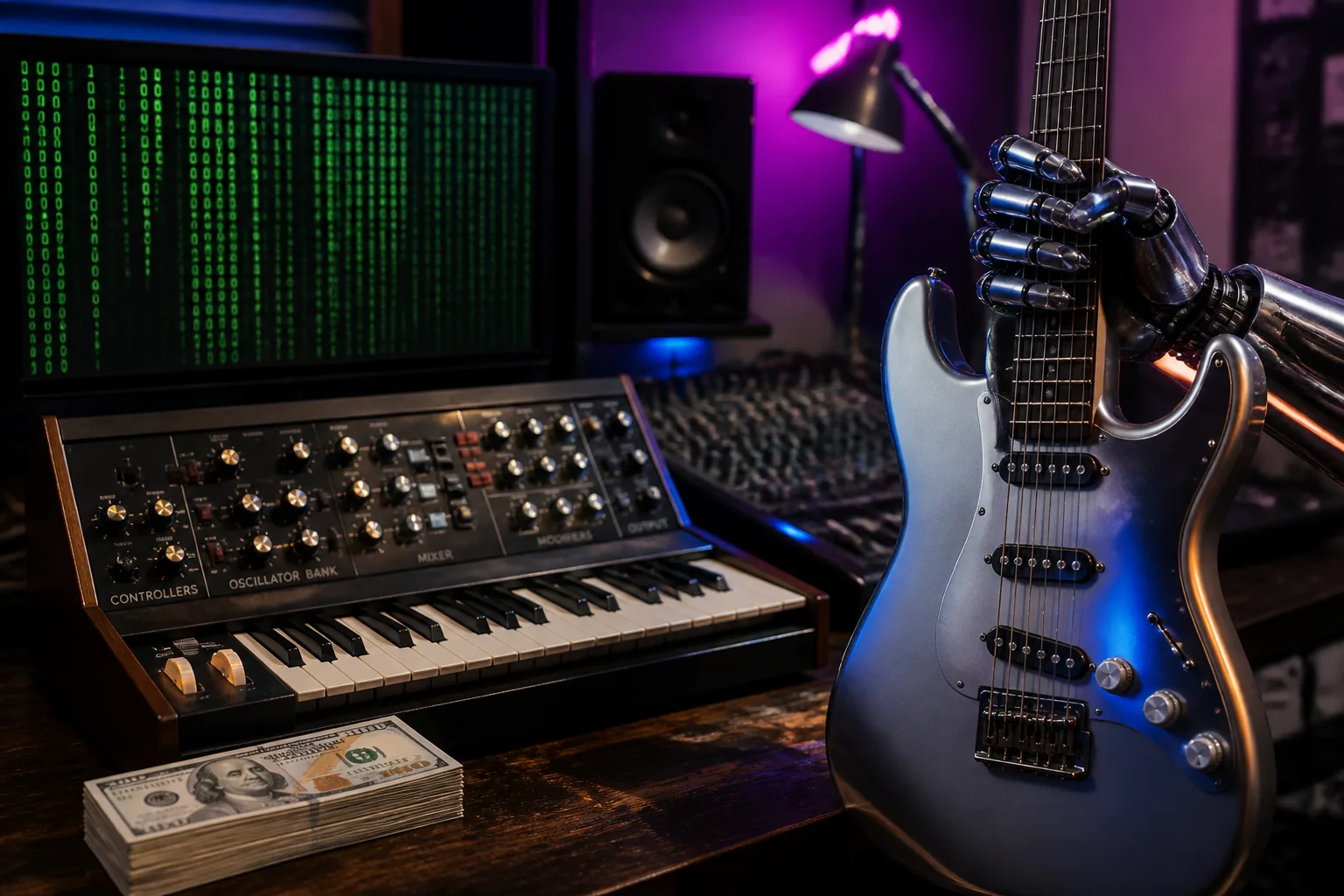
Tamber’s approach contrasts with many other AI‑powered music tools that generate finished tracks or stems from prompts. Instead, Tamber’s “bionic arm” model keeps creative decisions in the hands of the producer. According to the company’s statements, the platform is meant to “move with you, built for the way you actually make music,” and to operate “inside the moment, not around it.”
The startup’s launch strategy has been to release the suite incrementally. The first public release occurred in May 2026, with a beta that allowed users to test the gesture interface and sample‑search capabilities. In August 2026, Tamber rolled out version 2.0, adding native Windows support and refining the five‑app architecture. The update also introduced new features such as natural‑language DAW tools and an expanded Sonic Atlas.
Industry analysts note that Tamber’s emphasis on assistive AI fills a niche that has been largely overlooked by larger players. While companies like LANDR and LANDR’s newer AI‑driven mastering services focus on post‑production, Tamber targets the creative phase of music production. The company’s claim that it does not train on third‑party audio has been highlighted as a differentiator in a market where data sourcing has raised ethical concerns.
Tamber’s funding round and product roadmap come at a time when the music‑tech sector is seeing increased investment in AI tools that aim to streamline production workflows. The company’s investors, including Adobe Ventures, have a history of backing products that integrate with creative software ecosystems, suggesting potential future partnerships with DAW developers.
As of the latest reports, Tamber has 1,057 followers on LinkedIn and maintains an active online presence through its website and social‑media channels. The startup’s next steps include expanding its sound library, enhancing gesture recognition accuracy, and pursuing integrations with popular DAWs such as Ableton Live and FL Studio.
In summary, Tamber’s $5 million seed round and upcoming product releases position it as a notable entrant in the AI‑assisted music production space. By focusing on non‑generative, workflow‑centric tools, the company aims to provide musicians with a “bionic arm” that enhances creativity without replacing the human element.
The company’s public pitch is that it is building an “assistive, non‑generative” suite of tools for musicians. Tamber’s technology translates text, voice, and gesture into real‑time creative control, enabling users to discover sounds, shape parameters, and explore new directions without interrupting their workflow. The suite is designed to extend, not replace, human artistry.
Tamber’s core tools are available as five connected apps: Gestures, Tamby, Librarian, City Packs, and Sonic Atlas. Gestures provides a gesture‑based interface that can be used inside a digital audio workstation (DAW). Tamby is a sample‑selection tool that uses the company’s global sound library, which is built from original recordings and does not rely on third‑party audio for training. Librarian helps users organize and search their own sample collections. City Packs offers curated sound packs themed around specific musical styles, while Sonic Atlas maps sonic attributes across the library, allowing producers to find sounds that match a particular timbre or mood.
The company’s website, tamber.music, offers a free trial and a Pro subscription priced at $9.99 per month. The Pro plan unlocks all five apps and provides additional features such as higher‑resolution sound libraries and advanced workflow integrations.
Tamber’s approach contrasts with many other AI‑powered music tools that generate finished tracks or stems from prompts. Instead, Tamber’s “bionic arm” model keeps creative decisions in the hands of the producer. According to the company’s statements, the platform is meant to “move with you, built for the way you actually make music,” and to operate “inside the moment, not around it.”
The startup’s launch strategy has been to release the suite incrementally. The first public release occurred in May 2026, with a beta that allowed users to test the gesture interface and sample‑search capabilities. In August 2026, Tamber rolled out version 2.0, adding native Windows support and refining the five‑app architecture. The update also introduced new features such as natural‑language DAW tools and an expanded Sonic Atlas.
Industry analysts note that Tamber’s emphasis on assistive AI fills a niche that has been largely overlooked by larger players. While companies like LANDR and LANDR’s newer AI‑driven mastering services focus on post‑production, Tamber targets the creative phase of music production. The company’s claim that it does not train on third‑party audio has been highlighted as a differentiator in a market where data sourcing has raised ethical concerns.
Tamber’s funding round and product roadmap come at a time when the music‑tech sector is seeing increased investment in AI tools that aim to streamline production workflows. The company’s investors, including Adobe Ventures, have a history of backing products that integrate with creative software ecosystems, suggesting potential future partnerships with DAW developers.
As of the latest reports, Tamber has 1,057 followers on LinkedIn and maintains an active online presence through its website and social‑media channels. The startup’s next steps include expanding its sound library, enhancing gesture recognition accuracy, and pursuing integrations with popular DAWs such as Ableton Live and FL Studio.
In summary, Tamber’s $5 million seed round and upcoming product releases position it as a notable entrant in the AI‑assisted music production space. By focusing on non‑generative, workflow‑centric tools, the company aims to provide musicians with a “bionic arm” that enhances creativity without replacing the human element.