
ArtistDirect News
Musics Gender Parity Index Reveals Women Hold Less Than 30% of Industry Rosters
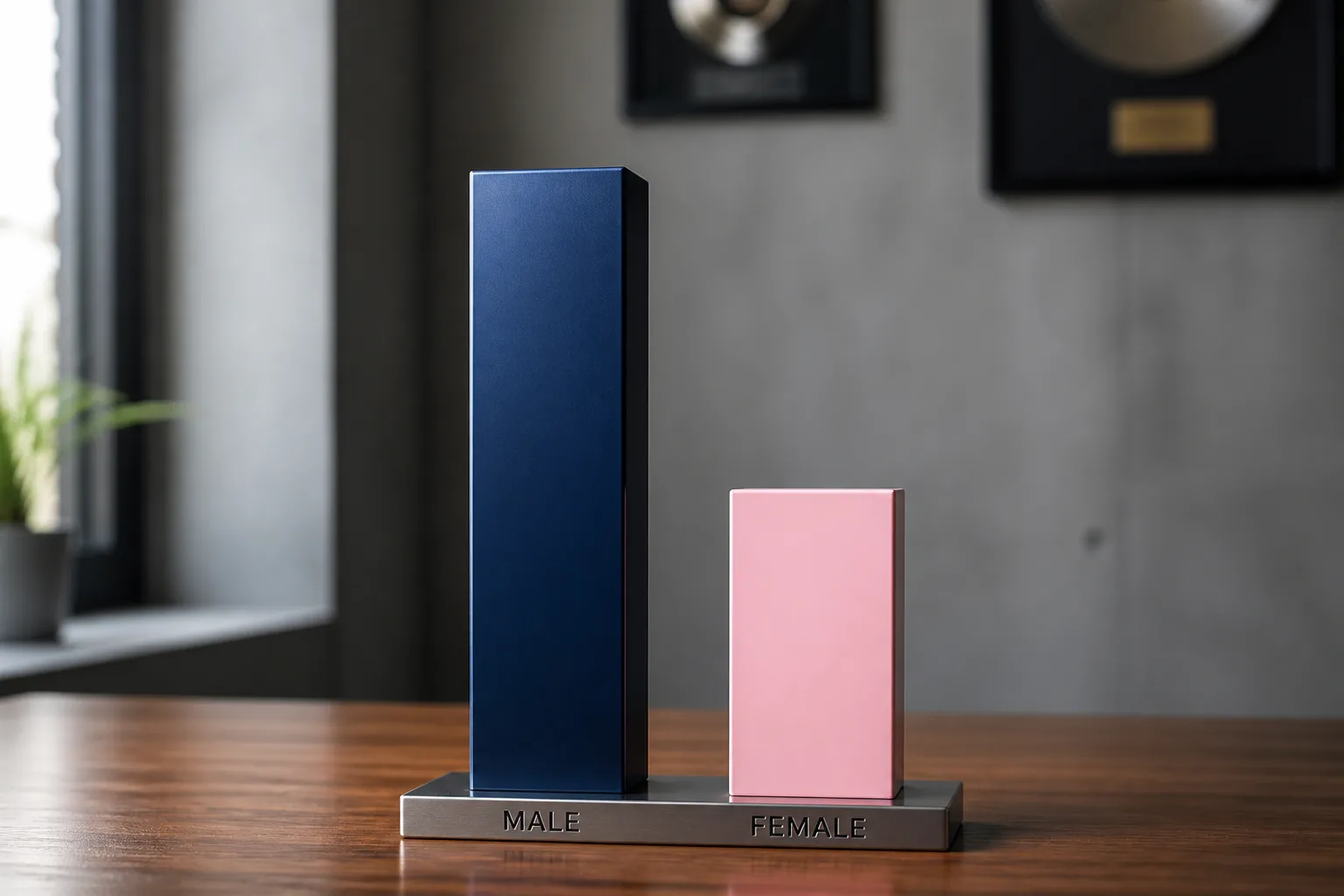
On Women’s Equality Day, August 26, 2026, the She Is The Music collective and ROSTR unveiled the Music’s Gender Parity Index. Drawing on data from more than 500 record labels, publishers, management firms and booking agencies, the report shows that women make up just 29.7% of rostered creators, 26.7% of managers and 25.9% of agents.
The analysis rests on ROSTR’s extensive music‑industry database, which tracks roster composition for over 500 entities that generate intellectual property. It also singles out 63 companies and professionals whose rosters contain at least 50% women—what the report calls the 50% Club. The findings make clear that the underrepresentation extends beyond artists to the professionals who represent them.
Since 2023, women have signed roughly 35% of new representation deals each year, a figure that has remained flat. Within those deals, women’s share of management signings has hovered around 39%, while their share of new label signings fell from 38.4% in 2023 to 34.3% through July 10, 2026. In publishing, women account for only 27.8% of new deals.
The report ranks firms by the proportion of women on their rosters. In the agency sector, CAA leads with 38.6%, followed by UMG at 34.2% and Concord at 35.8%. Among the ten largest agencies with at least 100 creators, three boast majority‑women rosters: TBA Agency (55.6%), Luger (53.6%) and Select Music (50.4%). All ten of the highest‑ranked management companies with at least 15 creators have reached parity, with Sandbox Entertainment topping the list at 66.7% women. Nine individual managers with at least ten creators have also achieved parity, including Sebastien LeTellier of Raw Material (81.8%) and others such as Cherie Lily of Voss Management, Jason Owen of Sandbox Entertainment and Max Gousse of Artistry Group, each with 64.3% women.
In the label sector, Mouthwatering Records is the only qualifying label with a roster of at least 30 creators that is majority women, at 55.9%. Five publishers have rosters that are at least 50% women, with Terrorbird at 68.8% and Killphonic at 57.9%.
To push the industry toward parity, the report proposes five commitments for companies that sign, represent, employ or invest in talent: measuring progress, setting credible benchmarks, broadening outreach, expanding pathways and maintaining transparency. ROSTR has pledged $63,000 in ROSTR Pro subscriptions to support She Is The Music’s work in honor of the 63 companies already in the 50% Club, and the pledge will increase as more firms join.
The index underscores that roster decisions shape which ideas receive capital, distribution, licensing and performance opportunities. When women are underrepresented on these rosters, the industry risks underinvesting in creative voices, audiences and revenue streams that could strengthen the entire music ecosystem. The 50% Club demonstrates that balanced rosters are achievable across business models, markets and roster sizes.
In summary, the Music’s Gender Parity Index confirms that women remain a minority on music‑industry rosters, but it also highlights a growing number of firms that have achieved parity. The report’s data and recommendations provide a benchmark for the industry to track progress toward gender equity by 2030.
The analysis rests on ROSTR’s extensive music‑industry database, which tracks roster composition for over 500 entities that generate intellectual property. It also singles out 63 companies and professionals whose rosters contain at least 50% women—what the report calls the 50% Club. The findings make clear that the underrepresentation extends beyond artists to the professionals who represent them.
Since 2023, women have signed roughly 35% of new representation deals each year, a figure that has remained flat. Within those deals, women’s share of management signings has hovered around 39%, while their share of new label signings fell from 38.4% in 2023 to 34.3% through July 10, 2026. In publishing, women account for only 27.8% of new deals.
The report ranks firms by the proportion of women on their rosters. In the agency sector, CAA leads with 38.6%, followed by UMG at 34.2% and Concord at 35.8%. Among the ten largest agencies with at least 100 creators, three boast majority‑women rosters: TBA Agency (55.6%), Luger (53.6%) and Select Music (50.4%). All ten of the highest‑ranked management companies with at least 15 creators have reached parity, with Sandbox Entertainment topping the list at 66.7% women. Nine individual managers with at least ten creators have also achieved parity, including Sebastien LeTellier of Raw Material (81.8%) and others such as Cherie Lily of Voss Management, Jason Owen of Sandbox Entertainment and Max Gousse of Artistry Group, each with 64.3% women.
In the label sector, Mouthwatering Records is the only qualifying label with a roster of at least 30 creators that is majority women, at 55.9%. Five publishers have rosters that are at least 50% women, with Terrorbird at 68.8% and Killphonic at 57.9%.
To push the industry toward parity, the report proposes five commitments for companies that sign, represent, employ or invest in talent: measuring progress, setting credible benchmarks, broadening outreach, expanding pathways and maintaining transparency. ROSTR has pledged $63,000 in ROSTR Pro subscriptions to support She Is The Music’s work in honor of the 63 companies already in the 50% Club, and the pledge will increase as more firms join.
The index underscores that roster decisions shape which ideas receive capital, distribution, licensing and performance opportunities. When women are underrepresented on these rosters, the industry risks underinvesting in creative voices, audiences and revenue streams that could strengthen the entire music ecosystem. The 50% Club demonstrates that balanced rosters are achievable across business models, markets and roster sizes.
In summary, the Music’s Gender Parity Index confirms that women remain a minority on music‑industry rosters, but it also highlights a growing number of firms that have achieved parity. The report’s data and recommendations provide a benchmark for the industry to track progress toward gender equity by 2030.