
ArtistDirect News
Paul Kelly Reflects on Songwriting and the Uncertain Impact of AI at BIGSOUND 2026
Paul Kelly, the Australian singer‑songwriter who has been active for more than four decades, spoke on stage at Brisbane’s BIGSOUND festival on 1 September 2026 about how he writes songs and how the rise of artificial intelligence (AI) is changing the music landscape.
During a set at the Fortitude Music Hall, Kelly answered questions from the audience and from reporters. He said he has no formal method for writing songs and that the process often starts with “singing sounds.” Kelly explained that he tries to match vowel sounds in the melody, and if the words do not fit the vowel pattern he feels the result is a step down.
Kelly’s comments were followed up in an interview with Rolling Stone AU/NZ. He admitted that he still feels like a beginner when it comes to songwriting, saying, “I know it sounds weird, but I don’t really know how to write a song.” He added that songwriting is not a craft that can be taught in a playbook.
The veteran artist has witnessed every major shift in the industry. He has seen the transition from vinyl to CD, the launch of the internet, the rise of streaming, and now the emergence of AI tools that can generate music. Kelly said that while technology has made recording cheaper and easier, it also raises new questions.
He recalled that when he first started recording, a day in the studio could cost around $1,000. Today, he notes, recordings are much cheaper and artists can connect with like‑minded people online. However, he remains cautious about AI. “I don’t think there’s anything like this that I can compare it to… I think we need some caution. I think it can be dangerous,” Kelly said.
Kelly also highlighted the irreplaceable value of live performance. He said that playing music with people creates an ecosystem that AI cannot touch. “You can’t AI this, playing music with people. It’s not just you playing to these people, these people are connecting to the people around them,” he explained.
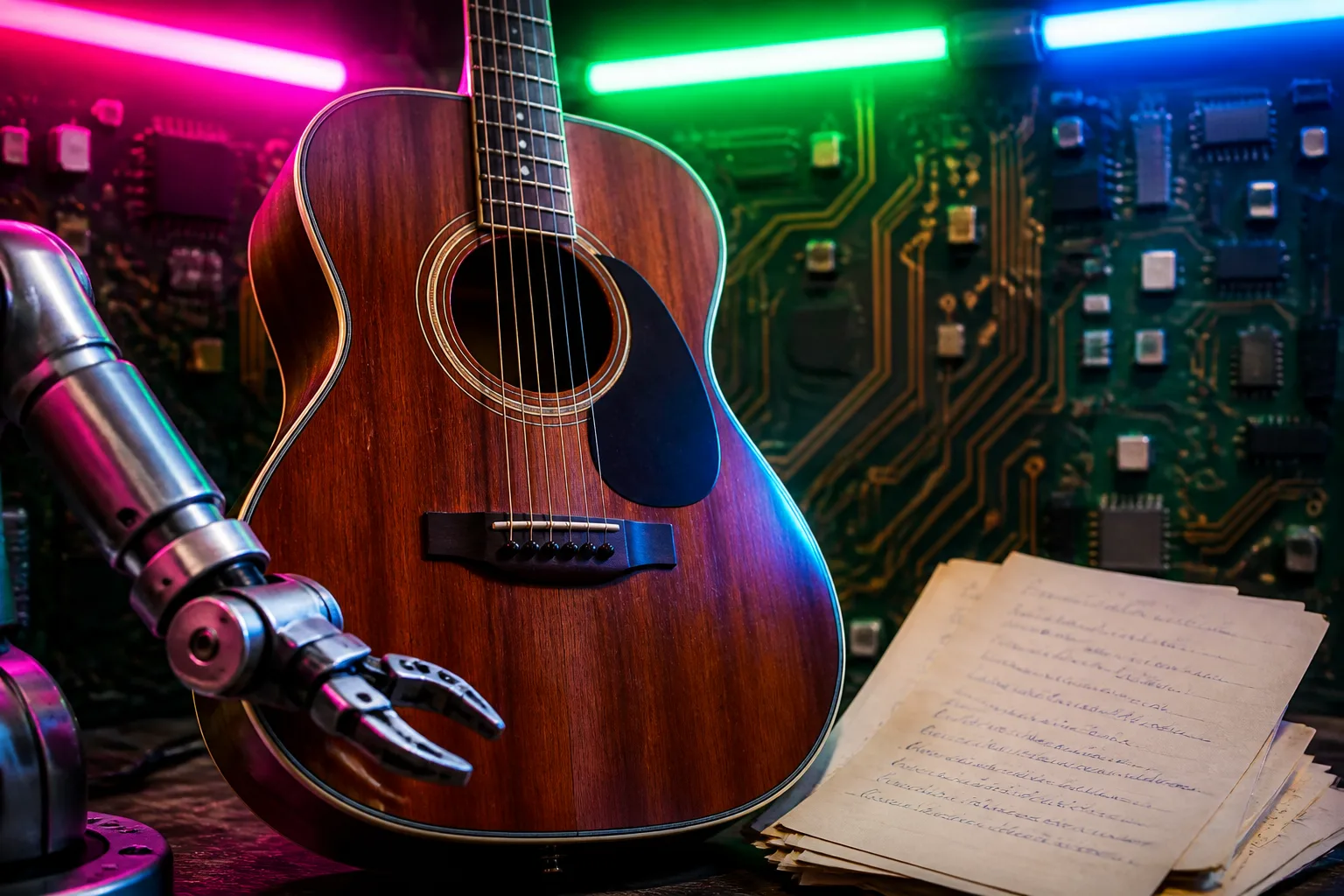
The artist’s reflections come at a time when AI tools are being used to compose, produce, and recommend music. According to Wikipedia, AI in music can simulate complex human cognitive processes and is applied in areas such as computer accompaniment, interactive composition, and music recommendation.
Kelly’s stance is that while AI may assist in some aspects of music creation, it cannot replace the human element that he values in songwriting and live performance. He remains optimistic about the future of music but urges caution.
The deluxe version of Kelly’s album Seventy was released earlier this month, and the artist’s comments were widely reported by outlets such as Tone Deaf, The Music Network, and Esquire Australia.
In summary, Paul Kelly used his appearance at BIGSOUND to share his personal approach to songwriting, to acknowledge the technological changes that have shaped the industry, and to express a measured view on the role of AI in music. He continues to advocate for the importance of human creativity and live connection in an era of rapid digital innovation.
During a set at the Fortitude Music Hall, Kelly answered questions from the audience and from reporters. He said he has no formal method for writing songs and that the process often starts with “singing sounds.” Kelly explained that he tries to match vowel sounds in the melody, and if the words do not fit the vowel pattern he feels the result is a step down.
Kelly’s comments were followed up in an interview with Rolling Stone AU/NZ. He admitted that he still feels like a beginner when it comes to songwriting, saying, “I know it sounds weird, but I don’t really know how to write a song.” He added that songwriting is not a craft that can be taught in a playbook.
The veteran artist has witnessed every major shift in the industry. He has seen the transition from vinyl to CD, the launch of the internet, the rise of streaming, and now the emergence of AI tools that can generate music. Kelly said that while technology has made recording cheaper and easier, it also raises new questions.
He recalled that when he first started recording, a day in the studio could cost around $1,000. Today, he notes, recordings are much cheaper and artists can connect with like‑minded people online. However, he remains cautious about AI. “I don’t think there’s anything like this that I can compare it to… I think we need some caution. I think it can be dangerous,” Kelly said.
Kelly also highlighted the irreplaceable value of live performance. He said that playing music with people creates an ecosystem that AI cannot touch. “You can’t AI this, playing music with people. It’s not just you playing to these people, these people are connecting to the people around them,” he explained.
The artist’s reflections come at a time when AI tools are being used to compose, produce, and recommend music. According to Wikipedia, AI in music can simulate complex human cognitive processes and is applied in areas such as computer accompaniment, interactive composition, and music recommendation.
Kelly’s stance is that while AI may assist in some aspects of music creation, it cannot replace the human element that he values in songwriting and live performance. He remains optimistic about the future of music but urges caution.
The deluxe version of Kelly’s album Seventy was released earlier this month, and the artist’s comments were widely reported by outlets such as Tone Deaf, The Music Network, and Esquire Australia.
In summary, Paul Kelly used his appearance at BIGSOUND to share his personal approach to songwriting, to acknowledge the technological changes that have shaped the industry, and to express a measured view on the role of AI in music. He continues to advocate for the importance of human creativity and live connection in an era of rapid digital innovation.