Buddy Holly
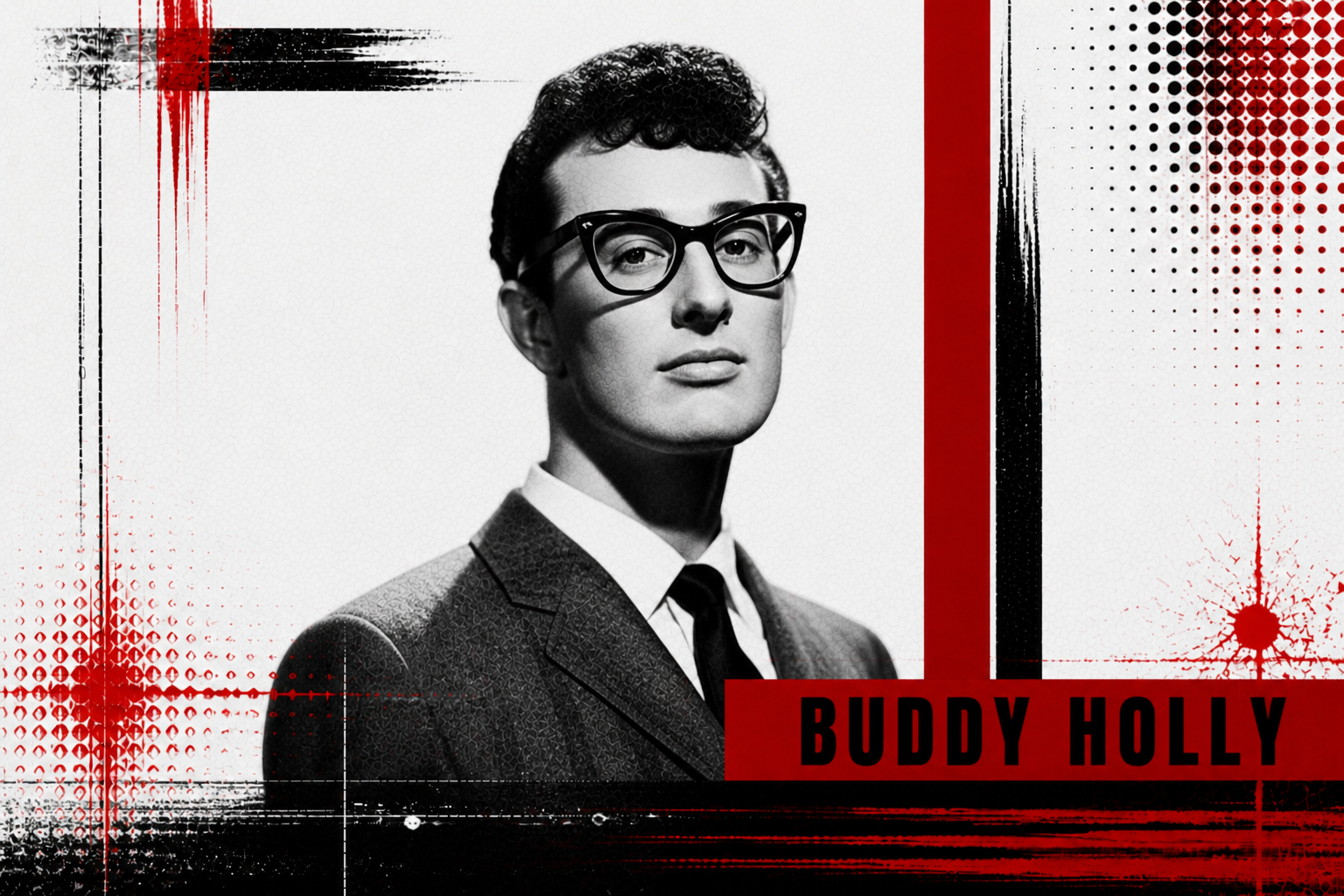
Buddy Holly was an American singer, songwriter, and guitarist widely regarded as one of the most influential pioneers of rock and roll. Born Charles Hardin Holley in Lubbock, Texas, he emerged in the mid-1950s with a distinctive sound that blended rock and roll, country, and rhythm and blues. His music is characterized by catchy melodies, clear vocal delivery, and innovative songwriting that helped shape the structure of modern popular music.
Holly gained widespread recognition with hits such as “That’ll Be the Day,” “Peggy Sue,” and “Everyday,” many of which were recorded with his band, The Crickets. These recordings showcased his ability to craft concise, memorable songs while also experimenting with studio techniques and arrangements. His work with The Crickets helped establish the model of the self-contained rock band.
Beyond his success as a performer, Holly was a pioneering songwriter and producer who took an active role in shaping his recordings. His approach to songwriting—combining simple structures with innovative ideas—had a lasting impact on future generations of musicians. Artists across rock, pop, and beyond have cited him as a major influence.
Holly’s career was tragically cut short in 1959 when he died in a plane crash alongside Ritchie Valens and The Big Bopper, an event often referred to as “The Day the Music Died.” Despite his brief career, his influence on music has been profound and enduring.
Today, Buddy Holly is remembered as a foundational figure in rock and roll history. His innovations in songwriting, recording, and band structure continue to resonate, and his music remains a cornerstone of popular music’s evolution.