Ritchie Valens
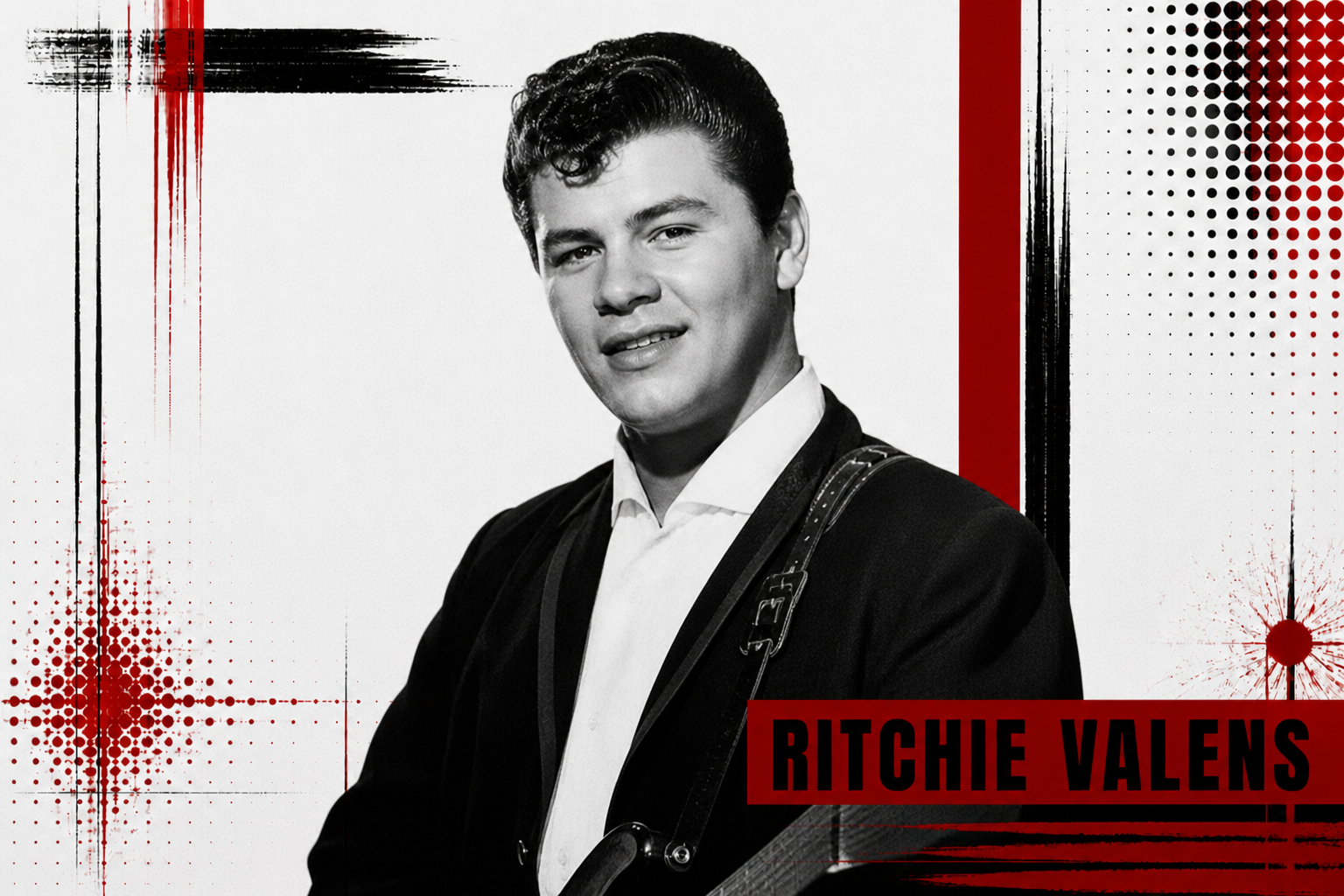
A concise, melodic approach to early rock and roll paired with a pioneering blend of Latin influence defines the work of Ritchie Valens, an artist whose brief career left a lasting imprint on popular music. Emerging in the late 1950s, Valens developed a sound rooted in the structures of rock and roll while incorporating elements drawn from his Mexican heritage, creating a style that expanded the genre’s cultural scope at an early stage in its evolution.
Early recordings established a foundation built on clear song structures, where guitar-driven arrangements and straightforward rhythms supported memorable vocal melodies. Tracks like “Donna” highlight a softer, more romantic side of his work, emphasizing phrasing and emotional clarity within a simple framework. This balance between accessibility and expression contributed to his rapid rise in popularity.
A defining moment came with “La Bamba,” a reinterpretation of a traditional Mexican folk song adapted into a rock and roll format. The track integrates rhythmic patterns and melodic elements from its origins while aligning with the instrumentation and energy of contemporary rock. This fusion created a new model for genre blending, demonstrating how cultural influences could be integrated into mainstream music.
A central aspect of his artistry lies in its economy, where songs are constructed with efficiency and purpose, avoiding unnecessary complexity. This directness allows each element—melody, rhythm, and vocal delivery—to function clearly within the composition, reinforcing the immediacy of his music.
His vocal style is characterized by a natural, unembellished tone that emphasizes sincerity over technical display. This approach aligns with the simplicity of his arrangements, creating a cohesive sound that feels both personal and widely relatable.
Despite his short career, Valens’ recordings contributed to the early development of rock as a genre capable of incorporating diverse influences. His work helped establish a foundation for later artists exploring similar intersections between cultural traditions and contemporary styles.
Live performances during his career reflected the same energy and clarity found in his recordings, where the focus remained on delivery and connection with the audience. These appearances reinforced his identity as a performer capable of translating studio work into a direct, engaging experience.
His influence extends into the broader history of rock and Latin music, particularly in the recognition of Latino artists within mainstream contexts. By achieving early success, he opened pathways for future musicians to bring their cultural backgrounds into popular music.
The brevity of his career has contributed to a legacy defined by potential as much as achievement, where the impact of his work is measured both by what was created and what might have followed. This perspective adds a layer of significance to his contributions.
Ritchie Valens’ legacy is defined by innovation, clarity, and cultural integration, illustrating how even a short period of creative output can reshape the direction of a genre. His music continues to resonate through its simplicity and influence, reflecting a moment when rock and roll expanded its boundaries through new voices and perspectives.