Weird Al
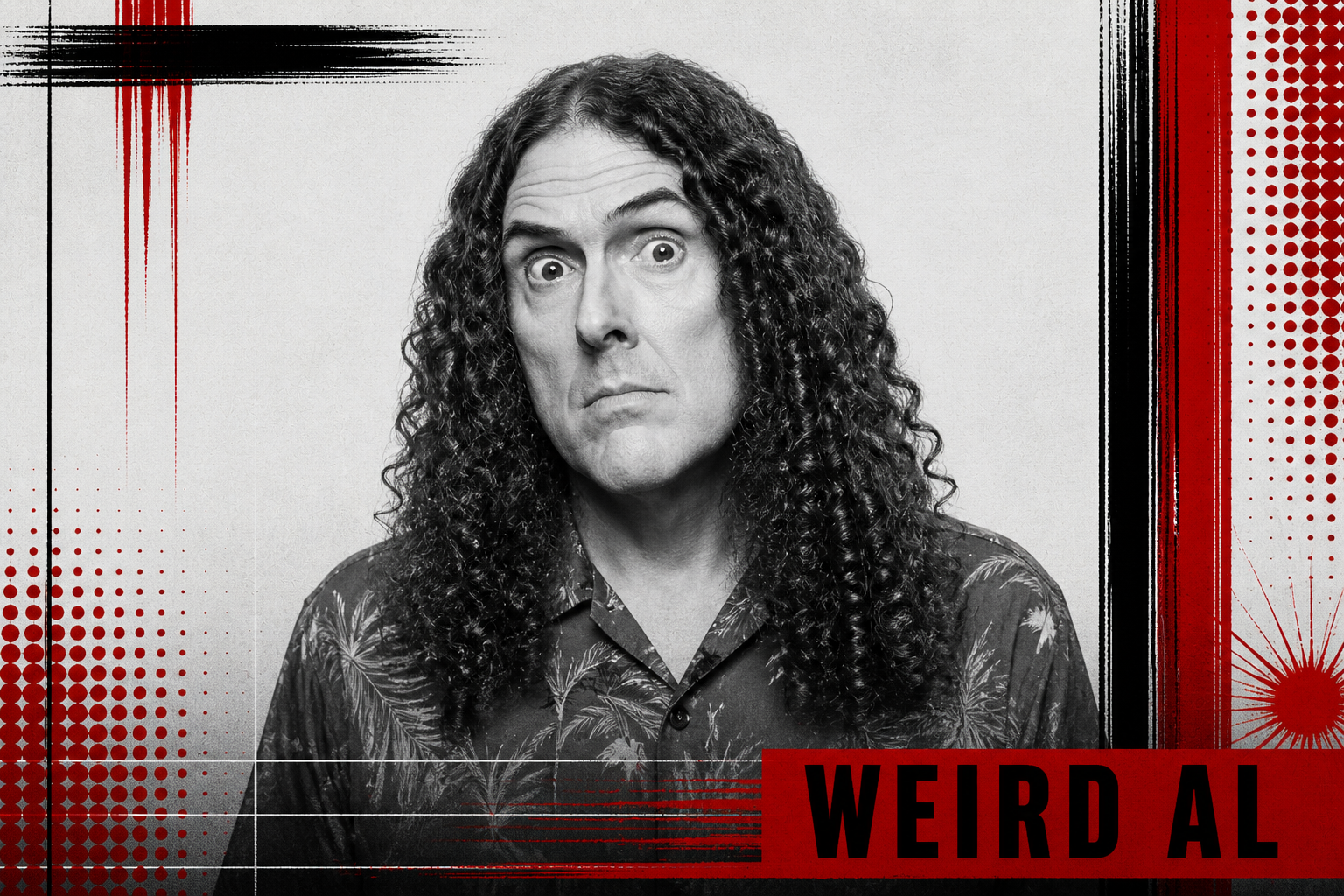
Few artists have built a career as unique—or as enduring—as Weird Al Yankovic. In a music industry often driven by image, trends, and reinvention, Weird Al carved out a lane entirely his own: comedy through meticulous musical parody. What could have been a novelty act lasting a few years instead became a decades-long career defined by consistency, intelligence, and an almost unmatched ability to adapt.
Emerging in the late 1970s and early 1980s, Weird Al first gained attention through humorous songs that reimagined popular hits with absurd, often brilliantly constructed lyrics. Armed with his signature accordion and an ear for arrangement, he didn’t just parody songs—he recreated them with astonishing accuracy. Tracks like “Eat It” (a take on Michael Jackson’s “Beat It”) demonstrated both his comedic instincts and his deep respect for the source material.
What separated Weird Al from typical parody acts was his craftsmanship. Each song was carefully arranged to mirror the original, down to the smallest production details. This level of precision elevated his work beyond simple humor, turning it into a kind of musical commentary. He wasn’t mocking artists so much as playfully engaging with the culture around them, highlighting the quirks and excesses of pop music itself.
Over time, Weird Al proved remarkably adaptable. As musical styles shifted—from pop and rock to hip-hop and beyond—he continued to evolve alongside them. Songs like “Amish Paradise,” inspired by Coolio’s “Gangsta’s Paradise,” showed his ability to reinterpret even the most serious material with humor while still respecting its structure. This adaptability allowed him to remain relevant across multiple generations of listeners.
Another key to his longevity has been his image—or rather, his refusal to rely on one. While his early persona included the now-iconic curly hair and glasses, Weird Al has always prioritized the work over the persona. His comedy is rarely mean-spirited, instead leaning toward clever wordplay, absurd scenarios, and cultural observation. In an era where parody can often skew toward cynicism, his approach feels refreshingly genuine.
Beyond individual songs, Weird Al also helped legitimize comedy music as a serious artistic space. While novelty songs had always existed, he demonstrated that humor and musical excellence could coexist at the highest level. His albums consistently charted well, and his fan base grew to include not just casual listeners but musicians who respected his technical skill.
His influence can be seen across modern internet culture, where parody, remixing, and reinterpretation are now standard creative practices. In many ways, Weird Al anticipated the digital era’s approach to content—taking existing material and transforming it into something new, personal, and often hilarious.
Even as the industry changed, Weird Al maintained a strong connection with his audience. His live performances, often featuring elaborate costume changes and high-energy staging, reinforced his reputation as not just a recording artist but a true entertainer. He embraced the theatrical side of performance without ever losing the sincerity that defines his work.
Today, Weird Al Yankovic stands as more than just a parody artist—he is a cultural institution. His career demonstrates that humor in music doesn’t have to be disposable or short-lived. With intelligence, respect for craft, and a deep understanding of the music he transforms, he turned what could have been a gimmick into a lasting legacy.
In a world where trends come and go, Weird Al remains a constant: a reminder that creativity, when paired with originality and skill, can transcend genre—and make people laugh along the way.