Jim Reeves
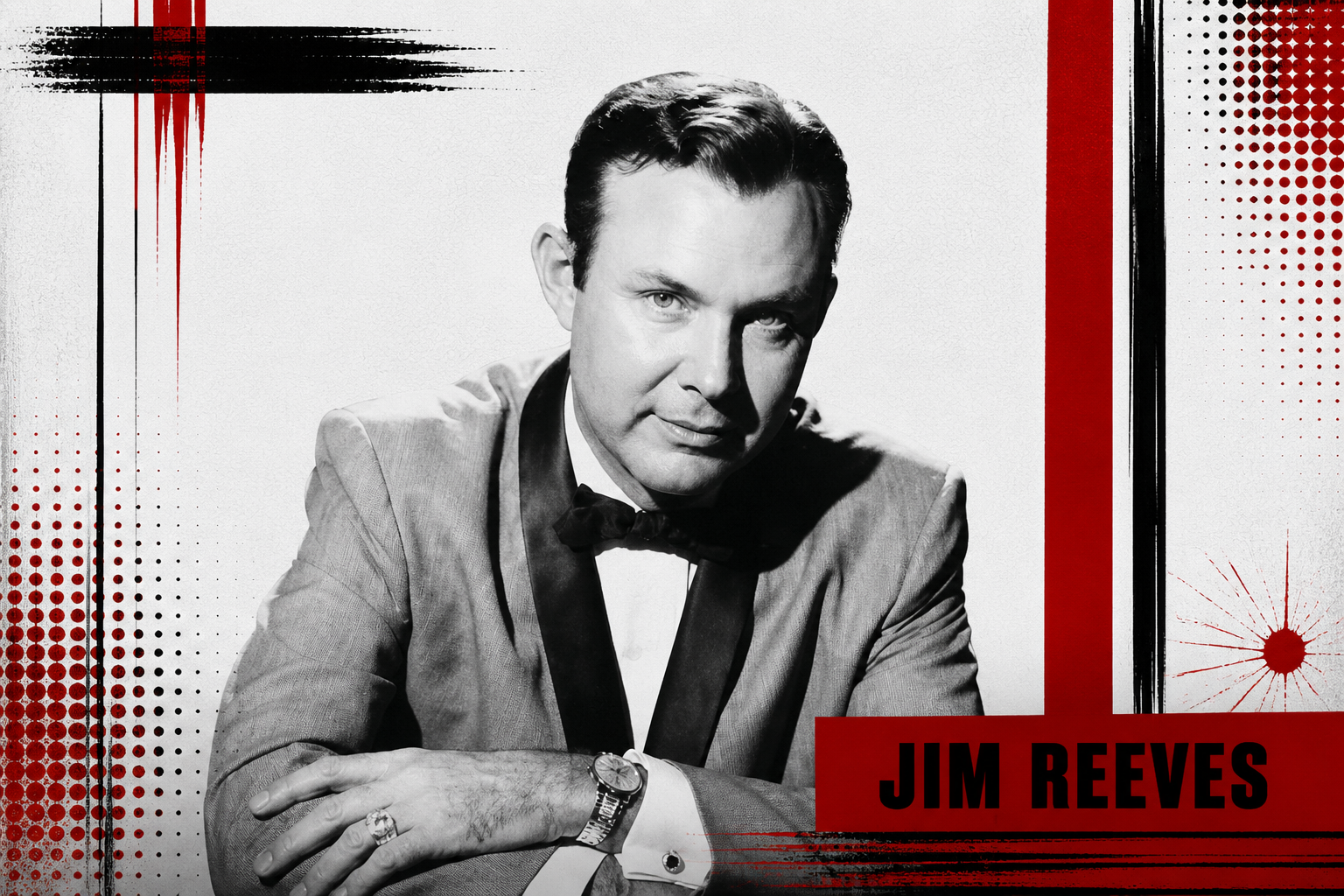
A smooth baritone voice, refined phrasing, and a polished, understated approach to country music define the work of Jim Reeves, an artist who helped shape the “Nashville Sound” into a globally recognized style. Emerging in the 1950s, Reeves moved away from the rougher edges of traditional country, embracing orchestral arrangements and a controlled vocal delivery that emphasized clarity and elegance. His music bridged country and pop audiences, establishing a model for crossover success that would influence generations of artists.
Early recordings reflected a transition from honky-tonk roots into a more sophisticated framework, where strings, background vocals, and restrained instrumentation supported the central vocal line. This shift aligned with broader changes within Nashville production, where the goal was to create recordings that could appeal to mainstream listeners without losing their emotional core. Reeves became one of the defining voices of this movement, demonstrating how country music could evolve without abandoning its storytelling traditions.
A defining aspect of his work lies in its emphasis on tone and control, where each note is delivered with precision and intention. Rather than relying on dramatic vocal flourishes, Reeves maintained a steady, measured delivery that allowed the emotional content of the lyrics to emerge naturally. This approach contributed to the timeless quality of his recordings, where simplicity becomes a strength rather than a limitation.
Songs such as “He’ll Have to Go” highlight his ability to convey intimacy through minimalism, using subtle phrasing and dynamic restraint to create a sense of closeness between artist and listener. The arrangement supports this effect, avoiding excess while reinforcing the clarity of the vocal performance. This balance between voice and instrumentation became a hallmark of his style.
His influence extends beyond country music, particularly in the development of crossover pop-country and easy listening genres. By demonstrating that country artists could achieve international appeal through refined production and accessible melodies, Reeves helped expand the reach of the genre into new markets.
Recording sessions during his career often emphasized efficiency and cohesion, reflecting a professional approach that prioritized consistency. This discipline contributed to a catalog that feels unified, where each release aligns with a clearly defined artistic identity.
Live performances maintained the same focus on clarity and connection, translating the controlled nature of his recordings into a direct and engaging experience. The emphasis remained on delivery and presence, reinforcing the qualities that defined his studio work.
Despite a career cut short, Reeves’ impact has remained substantial, with his recordings continuing to resonate across decades. His work introduced a level of refinement that reshaped expectations within country music, influencing both contemporaries and future artists.
His legacy is closely tied to the evolution of Nashville as a recording center, where the integration of orchestral elements and polished production became standard practice. Reeves’ contributions to this shift remain a key part of the genre’s history.
Jim Reeves’ legacy is defined by elegance, consistency, and a deep understanding of vocal expression, illustrating how restraint and precision can create lasting impact. His music endures through its clarity and emotional resonance, reflecting a style that continues to influence the broader landscape of country and popular music.