Slash
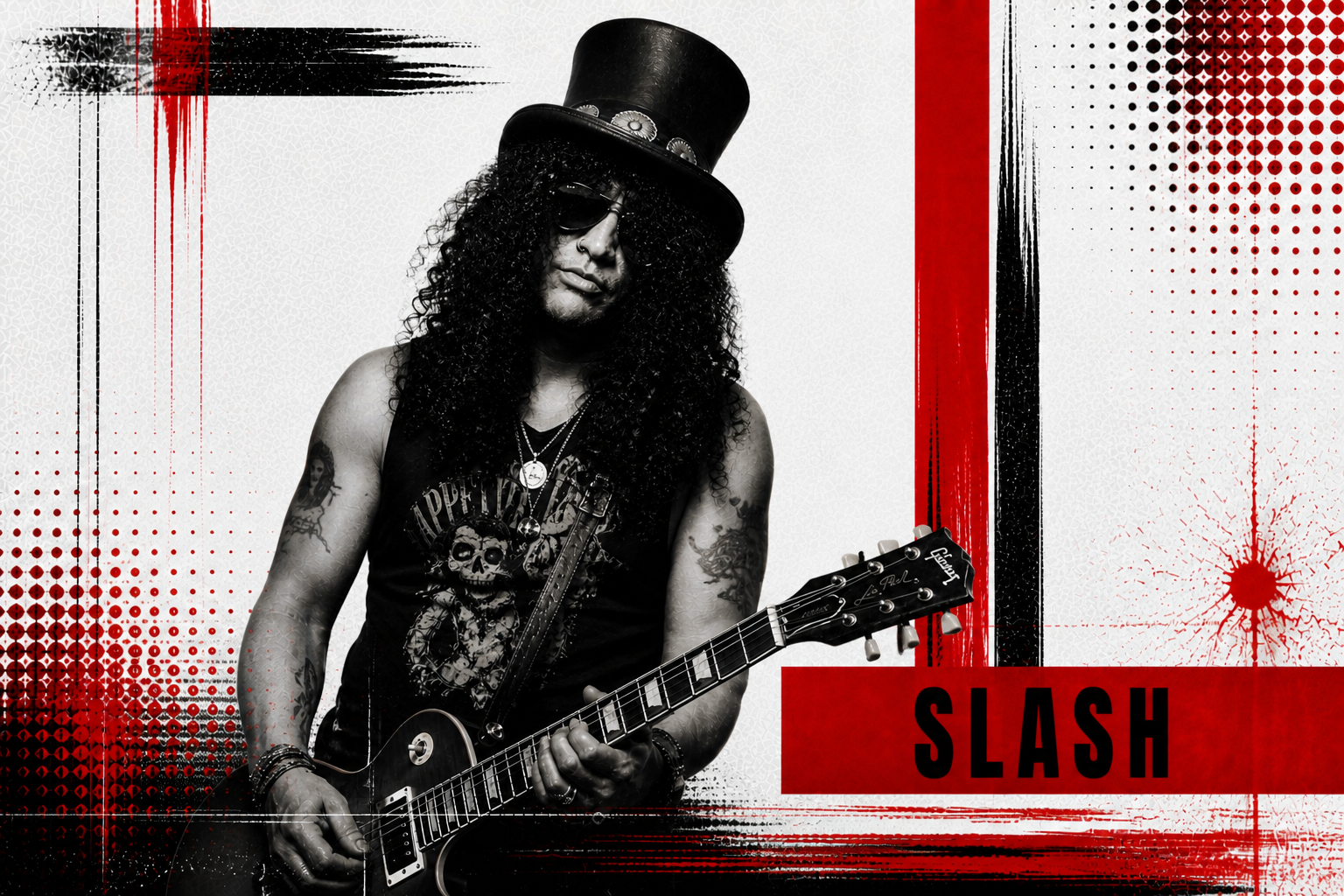
A top hat, a Les Paul, and a searing guitar tone have become inseparable from the identity of Slash, one of the most recognizable figures in modern rock. Emerging in the 1980s as the lead guitarist for Guns N' Roses, Slash helped define a sound that bridged classic rock influences with a raw, street-level edge. His playing drew from blues, hard rock, and early heavy metal, but it was the phrasing—melodic, expressive, and instantly identifiable—that set him apart from many of his contemporaries.
The band’s breakthrough with Appetite for Destruction introduced a style of guitar work that balanced aggression with clarity. Riffs like those in “Sweet Child O’ Mine” combined technical precision with a sense of openness, allowing the melody to carry as much weight as the rhythm. Slash’s solos, often built around strong melodic arcs rather than sheer speed, became defining moments within the songs, elevating them beyond standard rock structures. This approach connected with a wide audience, reinforcing the idea that virtuosity could coexist with accessibility.
As Guns N’ Roses expanded their sound with the Use Your Illusion albums, Slash’s role grew even more prominent. His guitar work adapted to longer compositions and more varied arrangements, incorporating acoustic elements, layered textures, and extended solos. This period highlighted his ability to navigate complexity without losing the core emotional impact of his playing. Even within larger, more ambitious tracks, his tone remained focused and recognizable, anchoring the music with a consistent identity.
Following his initial run with Guns N’ Roses, Slash continued to explore new creative avenues, forming projects such as Velvet Revolver and pursuing a solo career that brought him into collaboration with a range of vocalists and musicians. These ventures allowed him to experiment within different frameworks while maintaining the signature elements of his style—blues-inflected phrasing, strong melodic sensibility, and a commitment to live performance as a central aspect of his artistry.
Slash’s enduring influence lies in his ability to merge technical skill with emotional expression in a way that feels both immediate and timeless. His playing reflects a deep understanding of rock’s foundational elements while continuing to evolve alongside changing musical landscapes. Decades into his career, he remains a defining figure in guitar-driven music, with a sound and image that continue to resonate across generations of listeners and players alike.