Geese
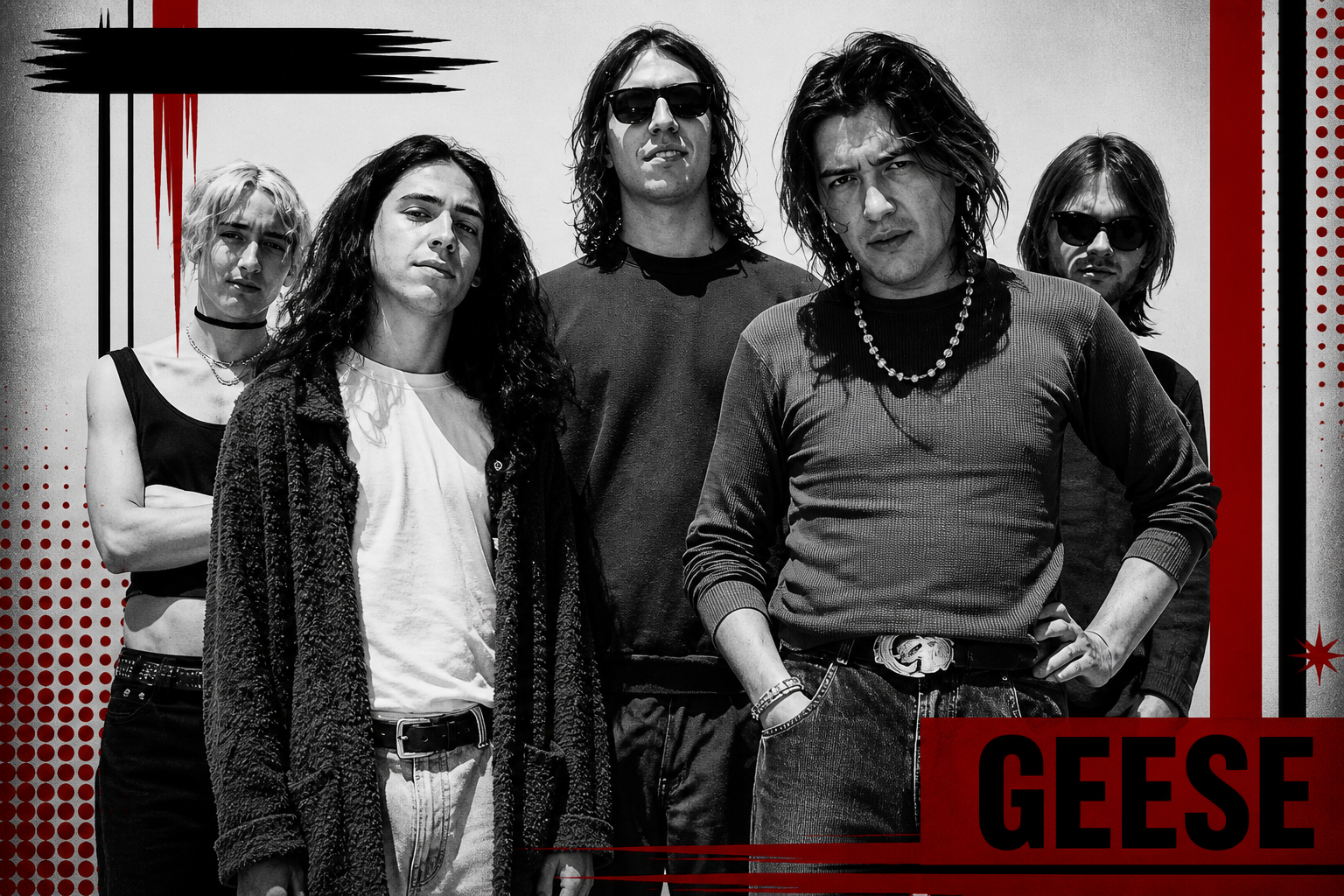
A restless blend of post-punk urgency, art-rock experimentation, and loose, groove-driven structures defines the sound of Geese, a New York–based group that emerged with a style built on tension, unpredictability, and movement. Formed by a group of young musicians, the band developed a sound that resists clean categorization, pulling from multiple rock traditions while maintaining a distinctly modern sense of pacing and texture.
Early recordings established a foundation rooted in jagged guitar work, shifting rhythms, and an emphasis on atmosphere. Their debut material introduced a raw yet controlled energy, where songs often feel on the edge of breaking apart while remaining tightly structured. This balance between chaos and precision became a defining feature of their approach.
A defining aspect of their music lies in its elasticity, where tempo, dynamics, and arrangement shift within a single track. Rather than adhering to predictable structures, Geese build songs through gradual transformation, allowing sections to evolve organically. This approach creates a sense of forward motion that keeps the listener engaged through variation rather than repetition alone.
Vocal delivery, led by frontman Cameron Winter, plays a central role in shaping the band’s identity, combining expressive phrasing with a tone that can move between restraint and intensity. His performance often mirrors the shifting nature of the instrumentation, reinforcing the dynamic quality of the compositions.
As their catalog developed, the band expanded its sonic palette, incorporating elements of classic rock, funk-influenced rhythm, and more open-ended arrangements. Albums like 3D Country reflect a willingness to stretch beyond their initial post-punk framework, introducing looser grooves and a broader tonal range while maintaining their core sense of unpredictability.
Instrumentation emphasizes interplay, where guitars, bass, and drums function as equal components within the mix. Each element contributes to the overall texture, often shifting roles throughout a track. This collective approach reinforces the band’s identity as a unit rather than a vehicle for a single focal point.
Live performances amplify these qualities, where extended sections and improvisational moments allow songs to take on new forms. The energy of the stage environment enhances the band’s dynamic range, creating a more immediate and fluid experience compared to the recordings.
Their influence can be seen within the current wave of indie and alternative rock that embraces experimentation and rejects rigid genre boundaries. By combining structure with spontaneity, Geese contribute to a broader movement toward more flexible approaches to songwriting.
Throughout their work, there is a consistent emphasis on momentum, where songs are constructed to move rather than settle. This focus aligns with their broader aesthetic, prioritizing progression and variation over static form.
Geese’s trajectory reflects a band in active evolution, with a sound that continues to expand while retaining its core identity. Their work illustrates how contemporary rock can draw from past influences while reshaping them into something fluid, unpredictable, and distinctly current.