The Darkness
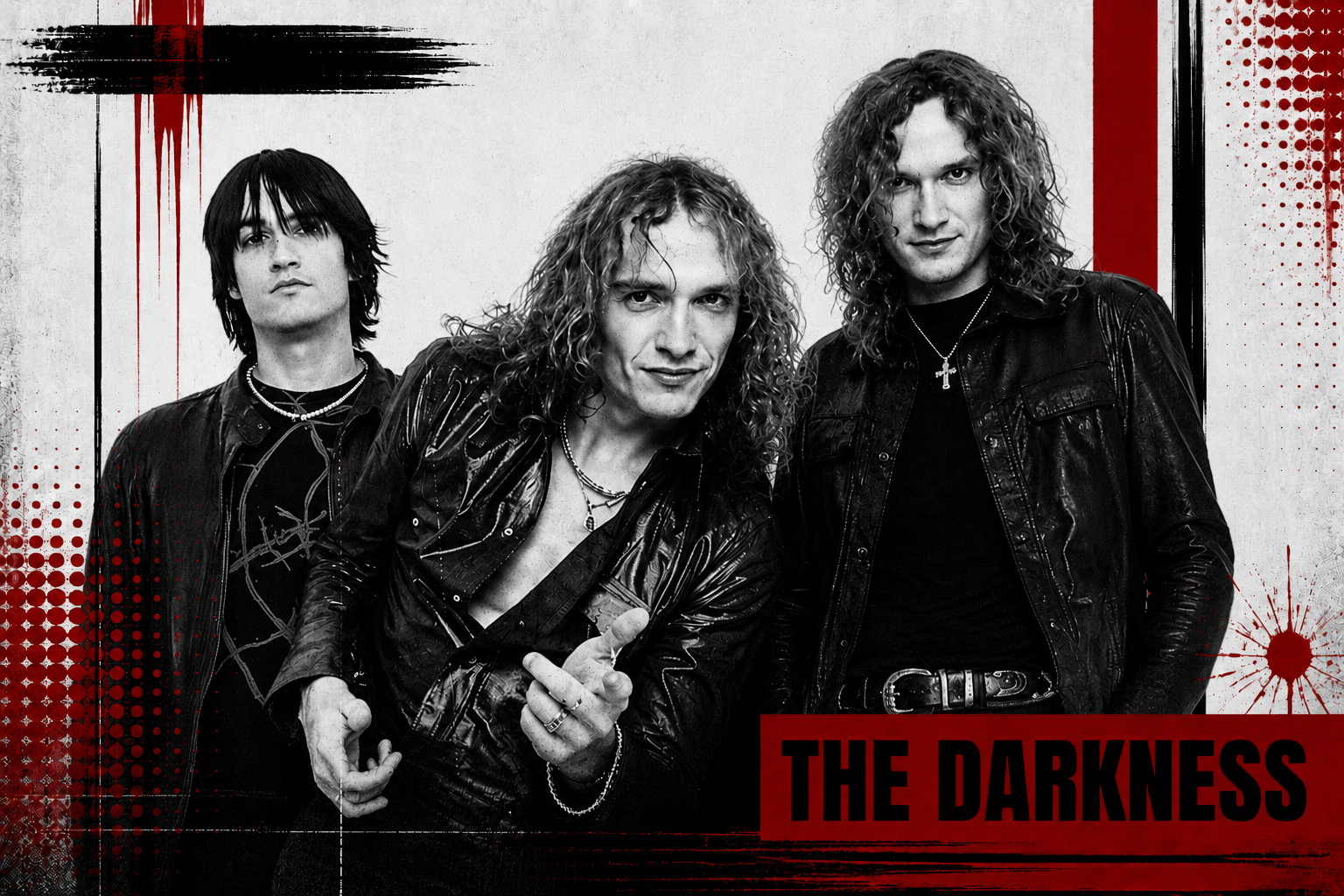
Formed in the early 2000s, The Darkness emerged as one of the most flamboyant, unapologetically theatrical, and instantly recognizable rock bands of their generation. Blending hard rock riffs, soaring falsetto vocals, glam rock swagger, and tongue-in-cheek humor, the British quartet arrived during an era dominated by indie rock and nü-metal, yet somehow managed to bring classic arena rock back into mainstream conversation. Their music celebrated excess, spectacle, guitar solos, and larger-than-life performance energy at a time when many believed those traditions had disappeared from modern rock music.
The band was formed in Lowestoft, Suffolk, England, by brothers Justin Hawkins and Dan Hawkins alongside bassist Frankie Poullain and drummer Ed Graham. Before forming The Darkness, Justin and Dan had played together in various musical projects, developing a deep appreciation for legendary acts such as Queen, AC/DC, Thin Lizzy, Def Leppard, and Van Halen. Those influences would become central to the band’s sound and visual identity, helping distinguish them from their contemporaries almost immediately.
The Darkness first gained significant attention through their explosive live shows, which combined virtuosic musicianship with over-the-top stage antics and glam-inspired fashion. Justin Hawkins, in particular, became known for his incredible falsetto range, charismatic personality, and fearless theatricality. The band’s performances often featured skin-tight catsuits, outrageous guitar poses, and an irreverent sense of humor that simultaneously celebrated and parodied rock star excess. Despite the humor embedded in their image, the musicianship behind The Darkness was undeniable, earning respect from longtime rock fans and musicians alike.
Their breakthrough arrived in 2003 with the release of their debut album, Permission to Land. The album quickly became one of the defining rock releases of the decade in the United Kingdom. Fueled by hit singles including I Believe in a Thing Called Love, Growing on Me, Get Your Hands Off My Woman, and Love Is Only a Feeling, the record showcased the band’s ability to fuse infectious hooks with classic hard rock energy. “I Believe in a Thing Called Love” became an international sensation thanks to its instantly memorable guitar riff, Justin Hawkins’ acrobatic vocals, and a wildly entertaining music video that perfectly captured the band’s personality.
Critics and audiences were initially unsure whether The Darkness were intended as a parody of classic rock or a genuine revivalist act. In reality, the band occupied a unique space somewhere in between. They possessed a deep affection for the genre’s traditions while also recognizing the inherent absurdity of rock excess. That self-awareness became one of their greatest strengths. Unlike many revival acts, The Darkness never felt like a nostalgia exercise. Instead, they brought humor, technical skill, and fresh songwriting into a sound inspired by the past but designed for a modern audience.
The success of Permission to Land was massive. The album sold millions of copies worldwide and earned the band multiple awards, including several BRIT Awards. The Darkness rapidly evolved from club performers into arena headliners, touring internationally and appearing at major festivals across Europe, North America, and beyond. Their rise felt especially significant because it occurred during a period when traditional guitar-driven rock was often viewed as commercially fading. The band’s success demonstrated that there was still a major audience for loud riffs, big choruses, and unapologetic showmanship.
In 2005, the band released their second studio album, One Way Ticket to Hell... and Back. The album expanded the group’s sound with more elaborate production, layered arrangements, and ambitious songwriting. Songs such as One Way Ticket and Is It Just Me? continued the band’s blend of humor and hard rock bombast. However, behind the scenes, the pressures of fame and relentless touring began taking a toll on the group.
Justin Hawkins eventually left the band in 2006 following struggles with substance abuse, leading many fans to believe The Darkness had effectively come to an end. During this hiatus, members pursued other musical projects, while Justin focused on recovery and future creative endeavors. Despite their relatively short initial run, the band’s influence had already become clear. Younger rock acts cited The Darkness as proof that flamboyant, guitar-driven rock music could still succeed in the modern era without sacrificing personality or fun.
In 2011, The Darkness reunited with their original lineup, returning to touring and recording with renewed energy. Their comeback was met with enthusiasm from fans who had long hoped to see the group return. The band released additional albums including Hot Cakes, Last of Our Kind, Pinewood Smile, and Motorheart, proving they were far more than a one-album phenomenon. Over time, the band developed a reputation as one of modern rock’s most reliable live acts, maintaining their signature humor and theatricality while continuing to evolve musically.
One of the defining characteristics of The Darkness has always been their refusal to compromise their identity. In an industry where trends constantly shift, the band remained committed to big hooks, explosive guitar solos, and entertaining performances. Their music embraced joy, absurdity, and spectacle in ways that many modern rock acts avoided. That authenticity helped cultivate a loyal fanbase spanning multiple generations of listeners.
Justin Hawkins also became widely recognized outside the band for his outspoken personality and deep knowledge of music history and performance. His commentary on the music industry, songwriting, and rock culture helped reinforce his reputation as not only a gifted frontman but also a thoughtful observer of modern entertainment and artistic trends. Meanwhile, Dan Hawkins earned praise for his powerful guitar work and production abilities, which became an essential foundation of The Darkness’ signature sound.
Over the years, The Darkness has continued to occupy a unique space in rock music. They are simultaneously comedic and technically impressive, nostalgic yet contemporary, theatrical yet sincere. Few bands have managed to revive the spirit of classic arena rock with such confidence while still feeling distinctively original. Their legacy extends beyond chart success, influencing younger rock musicians to embrace personality, spectacle, and musicianship without irony or restraint.
Today, The Darkness remains one of the most recognizable rock bands to emerge from the United Kingdom in the 21st century. Their catalog continues to attract new listeners discovering the band through streaming platforms, live performances, viral clips, and classic rock playlists. More than two decades after their debut, The Darkness stands as proof that rock music can still be loud, theatrical, funny, emotional, and wildly entertaining all at once.